
Last Updated on 2 months ago by admin
Do Roof Tents Damage Cars? What UK Buyers Should Know
A roof tent should not damage your car when it is correctly matched, properly fitted and used within the vehicle and roof bar limits.
But a roof tent can damage a car if the setup is wrong.
Most problems happen when buyers choose a tent that is too heavy, use unsuitable roof bars, ignore roof load limits, clamp fittings incorrectly, leave dirt under contact points, overload the roof, drive with loose fixings, or forget that a roof tent changes the height, weight and behaviour of the vehicle.
So the honest answer is:
A roof tent does not automatically damage a car, but a badly chosen or badly fitted roof tent can.
This guide explains how roof tent damage can happen, what UK buyers should check before buying, and how to reduce the risk of dents, scratches, leaks, roof bar damage, insurance issues and unsafe driving.
Quick Answer: Will a Roof Tent Damage My Car?
A roof tent is unlikely to damage a suitable car if:
- the vehicle roof load limit is high enough;
- the roof bars or roof rack are suitable;
- the tent weight is within the correct limit;
- the mounting points are fitted properly;
- the tent is secured according to manufacturer guidance;
- the car roof, rails and bars are kept clean;
- the setup is checked regularly;
- the insurer is told where required.
A roof tent is more likely to cause damage if:
- the tent is too heavy;
- the roof bars are not rated correctly;
- clamp-style bars are unsuitable for the tent;
- the mounting hardware is overtightened or loose;
- the vehicle has a panoramic roof restriction;
- dirt or grit rubs between fittings and paintwork;
- the tent is left fitted long-term without checks;
- the vehicle is driven under height barriers;
- wind, speed or poor fitting causes movement.
Roof tent compatibility depends on the vehicle roof load capacity, roof design and roof rack system, not simply whether the tent physically sits on top of the car. Thule explains that the tent and roof racks must stay within the vehicle’s dynamic roof load limit while driving. (Thule)
The Main Ways a Roof Tent Can Damage a Car
A roof tent can potentially cause damage in several different ways.
1. Overloading the roof
This is the biggest risk.
Every vehicle has a maximum roof load limit. This is the weight the roof is designed to carry while driving. If the total setup exceeds that limit, you may put stress on the roof, rails, mounting points, bars and vehicle structure.
The RAC advises drivers to understand roof weight limits and follow manufacturer guidance when using roof racks, because roof loads can affect safety, vehicle height and driving behaviour. (RAC)
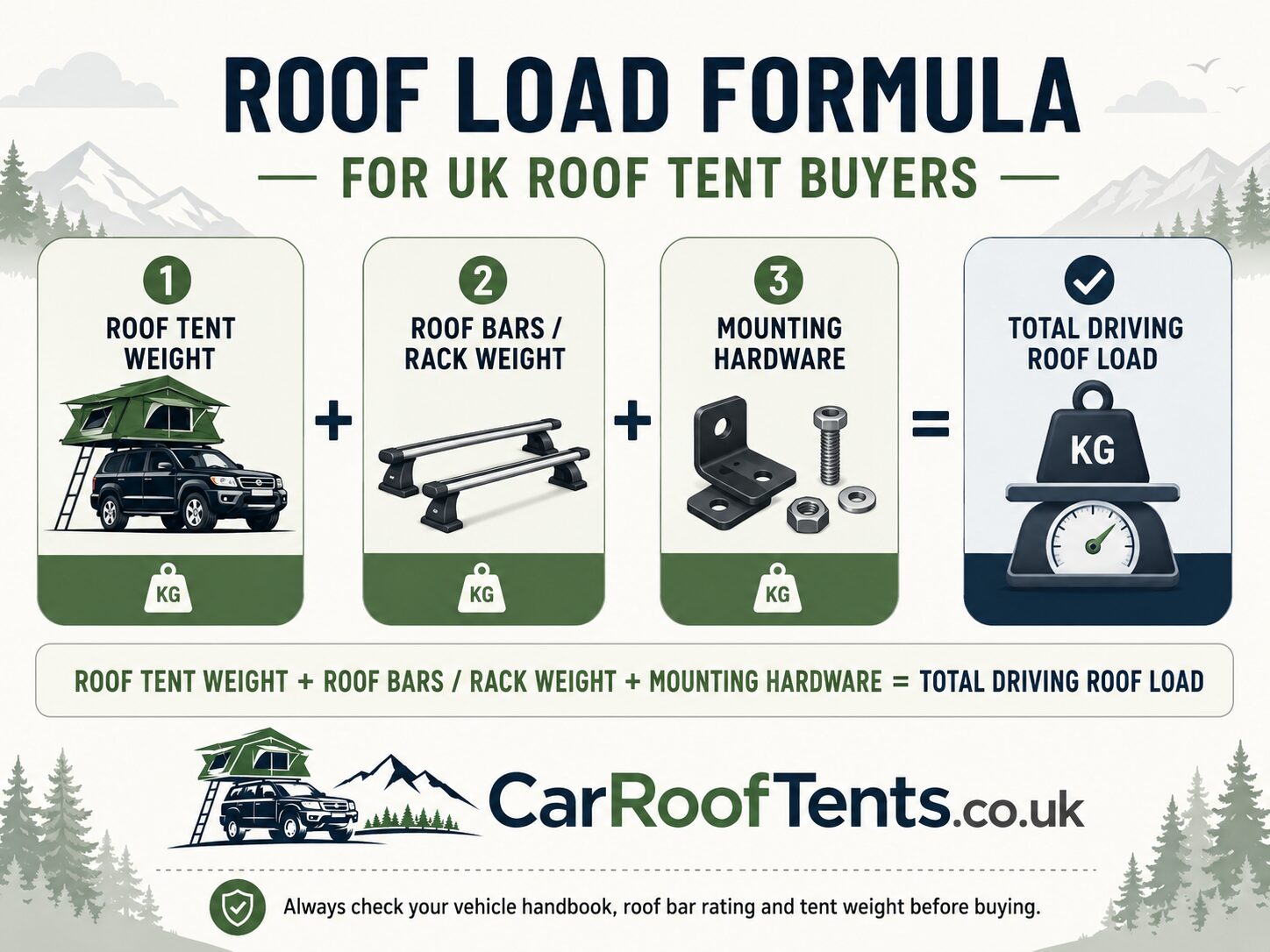
The key calculation is:
Roof tent weight + roof bars/rack weight + mounting hardware = total roof load while driving
For example:
| Item | Example Weight |
|---|---|
| Roof tent | 58kg |
| Roof bars | 6kg |
| Mounting hardware | 2kg |
| Total roof load while driving | 66kg |
If your car’s dynamic roof load limit is 75kg, this example may appear to be within limit. But you still need to check the vehicle handbook, roof bar rating and roof tent fitting guidance.
2. Using the wrong roof bars
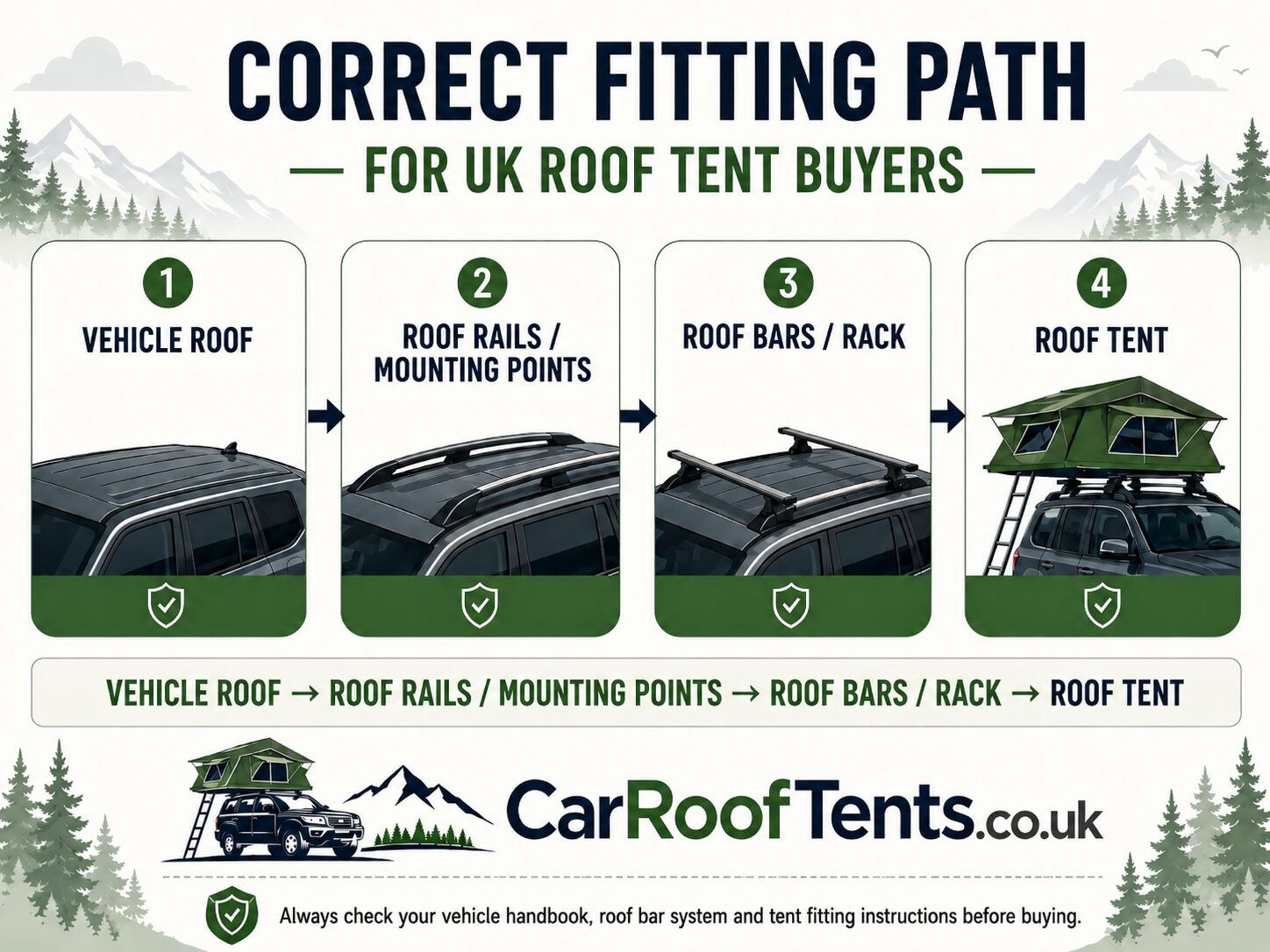
A roof tent should not be fixed directly to a bare car roof.
It needs suitable roof bars or a roof rack that are compatible with your exact vehicle and rated for the load. Thule describes roof racks as the secure interface between the vehicle and the rooftop tent, and says the rack system must match the roof type, support the combined weight and provide proper spacing and stability. (Thule)
Problems can happen if:
- the roof bars are too weak;
- the bar spread is wrong;
- the bars are not approved for roof tent use;
- the feet are fitted incorrectly;
- the mounting clamps are overtightened;
- the bars move while driving;
- the tent mounting rails do not sit correctly.
Do not assume roof bars suitable for a roof box are automatically suitable for a roof tent.
3. Scratches from dirt, grit and poor fitting
Roof tents themselves usually mount to the bars or rack, not directly to the paint. But scratches can still happen around roof rails, bar feet, clamps and contact points.
Common causes include:
- fitting bars onto dirty paintwork;
- trapped grit under rubber feet;
- sliding bars or brackets during installation;
- removing and refitting the tent carelessly;
- loose straps or covers rubbing against paint;
- tree branches or campsite obstacles catching the tent.
The easiest prevention is to clean the roof and roof bar contact areas before fitting anything.
4. Dents from incorrect loading or lifting
Roof tents are heavy and awkward.
Damage can happen before you even drive anywhere if the tent is dropped, dragged or rested on the roof during fitting.
Possible issues include:
- dents from lowering the tent unevenly;
- scratched paint from dragging mounting rails;
- cracked plastic trims;
- damaged roof rails;
- pressure marks around roof bar feet;
- bent brackets from poor alignment.
Most roof tents should be lifted by at least two people, and larger tents may need more help or a lifting system.
5. Damage from overtightening brackets
A roof tent needs to be secure, but overtightening can cause problems.
Overtightened brackets may:
- damage roof bar coatings;
- crush softer bar profiles;
- deform mounting channels;
- stress roof rail fixings;
- make removal difficult;
- increase the risk of stripped threads.
Always follow the roof tent and roof bar manufacturer’s torque or tightening guidance where provided.
6. Movement from loose fittings
Loose fittings are also a risk.
A tent that shifts while driving can damage bars, rails, brackets, paintwork and the tent itself. More importantly, it can become dangerous.
Official UK load-securing guidance says loads should be secured so they do not slide, fall or move in a way that creates risk on the road. While that guidance is written broadly for vehicle loads, the same principle applies to roof-mounted camping equipment: it must be properly secured before driving. (GOV.UK)
Check fixings:
- after initial fitting;
- after the first short drive;
- before long journeys;
- after rough roads;
- after heavy rain or wind;
- before returning from a campsite.
Dynamic vs Static Roof Load: Why It Matters
Roof tent damage worries often come from confusion around dynamic and static load.
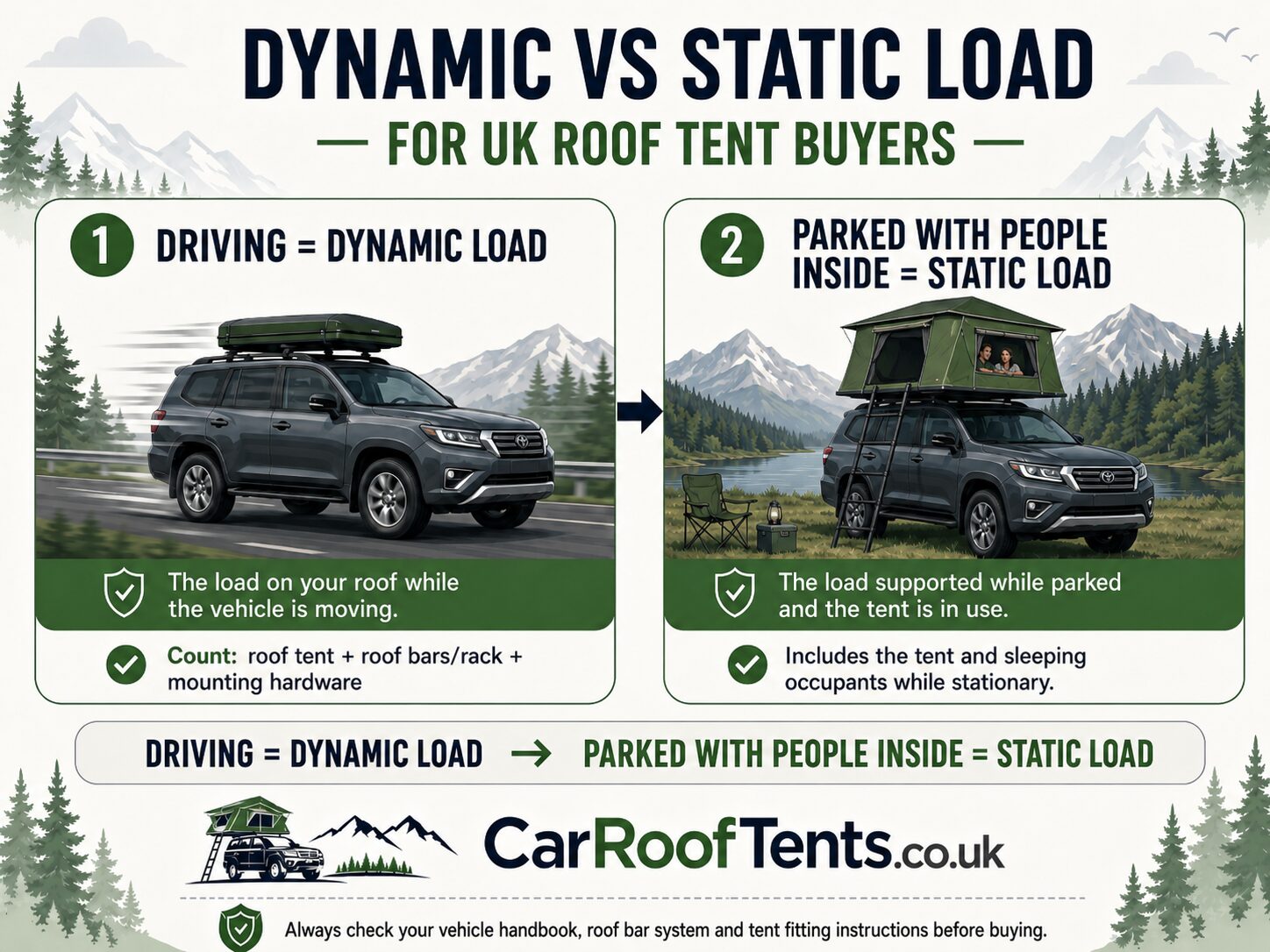
Dynamic roof load
Dynamic roof load is the weight your vehicle roof can carry while driving.
This includes:
- roof tent;
- roof bars or rack;
- mounting hardware;
- any approved bedding or accessories left inside while travelling.
This is the number you must check before driving with a roof tent fitted.
Static roof load
Static roof load is the weight the vehicle can support when parked.
This matters when people are sleeping inside the tent. The Camping and Caravanning Club explains that roof tent buyers should consider both static roof weight for campsite use and dynamic load while on the road, and should include roof bars or racks in their calculations. (Camping and Caravanning Club)
Simple explanation
| Situation | What matters |
|---|---|
| Driving with tent closed | Dynamic roof load |
| Parked with tent open | Static roof load |
| Sleeping inside the tent | Static load and manufacturer guidance |
| Choosing roof bars | Bar/rack dynamic rating and tent suitability |
| Avoiding damage | Stay within limits and fit properly |
The people sleeping inside the tent do not count towards the dynamic load because they are not inside the tent while the car is moving.
Can a Roof Tent Dent the Roof?
A properly fitted roof tent should load through the roof bars or rack, not press directly onto the roof panel.
However, dents or pressure damage can happen if:
- the wrong bars are used;
- the bars are overloaded;
- the roof rails are weak or unsuitable;
- the fitting feet are incorrectly positioned;
- the tent is dropped during fitting;
- the vehicle roof type is not suitable;
- the car has hidden roof damage or previous repairs;
- weight is placed directly on the roof skin.
Cars with panoramic roofs, glass roofs or unusual roof structures need extra caution. Thule advises checking with the vehicle manufacturer for vehicles with glass or large panoramic roofs. (Thule)
Can a Roof Tent Damage Roof Rails?
Yes, roof rails can be damaged if the wrong setup is used.
Raised rails, flush rails and factory rails are not all the same. Some are designed mainly for light accessories. Others can work with suitable crossbars and heavier roof loads.
Potential roof rail damage includes:
- cracked rail mounts;
- bent rails;
- loosened fixings;
- damaged trim;
- water ingress around mount points;
- paint wear around clamps.
Before buying, check whether your roof rails are actually load-bearing and what the manufacturer allows.
A car having roof rails does not automatically mean it can carry a roof tent.
Can Roof Bars Damage Paintwork?
Roof bars can damage paint if they are dirty, badly fitted or removed carelessly.
This is not unique to roof tents. Roof boxes, bike carriers and kayaks can cause similar issues if the fitting points are not clean or secure.
To reduce paint damage:
- wash and dry the roof before fitting bars;
- clean rubber feet and clamps;
- avoid sliding bars across paint;
- check for grit under contact pads;
- use correct vehicle-specific fitting kits;
- remove bars carefully;
- inspect contact areas after use.
A little preparation before fitting can prevent a lot of cosmetic damage.
Can a Roof Tent Cause Leaks?
A roof tent should not normally cause leaks if fitted correctly to suitable bars or racks.
Leaks are more likely if:
- roof rails are damaged;
- factory mounting points are disturbed;
- aftermarket fittings are incorrectly installed;
- water channels are blocked;
- seals around roof rails are already failing;
- holes have been drilled badly;
- a rack has been fitted without proper sealing.
Most ordinary roof tent installations should not involve drilling into the car roof. If drilling, specialist racks or vehicle conversions are involved, professional fitting becomes much more important.
Does a Roof Tent Affect Driving?
Yes, a roof tent can affect the way your car drives.
It may increase:
- vehicle height;
- wind noise;
- fuel use;
- crosswind sensitivity;
- braking effect from extra weight;
- body roll;
- roof load stress;
- height-barrier risk.
The RAC notes that roof loads can affect vehicle height and safety, and drivers should consider roof weight limits, secure fitting and changed driving behaviour when carrying roof loads. (RAC)
You should drive more carefully with a roof tent fitted, especially in strong wind, on motorways, on narrow lanes, and when entering car parks or campsites with low barriers.
Cars Most at Risk of Roof Tent Damage
Some vehicles need extra caution.
Small hatchbacks
Small cars may have lower roof load limits and shorter roof bar spacing. A lightweight roof tent may work, but only after proper checks.
Cars with panoramic roofs
Glass or panoramic roofs may have restrictions. Always check the vehicle manufacturer’s guidance.
Convertibles
Most convertibles are not suitable for roof tents.
Cars with clamp-style bars
Some clamp-style door-jamb bars may not be suitable for roof tents. Check both the roof bar and tent manufacturer’s guidance before buying.
Older vehicles
Older cars may have corrosion, worn seals, weaker roof rails or previous repairs.
Vehicles with damaged roofs
Do not fit a roof tent to a car with known roof damage, accident repairs or questionable rail mounts without professional advice.
How to Prevent Roof Tent Damage
1. Check the vehicle handbook first
Before choosing a tent, find your vehicle’s roof load limit.
Do not rely only on social media comments, forum guesses or “someone else has fitted one”.
2. Add up the full roof load
Use:
Tent weight + roof bars/rack + mounting hardware + allowed accessories = total driving roof load
If the number is close to your vehicle limit, choose a lighter tent.
3. Use suitable roof bars or a roof rack
The bars or rack must suit:
- the vehicle;
- the roof type;
- the tent weight;
- the bar spacing;
- the mounting system;
- the dynamic driving load.
4. Clean all contact areas
Before fitting:
- clean the roof;
- clean roof rails;
- clean bar feet;
- clean clamps;
- clean mounting channels.
Grit and dirt are common causes of scratches.
5. Fit in daylight with enough help
Do not rush installation.
Use two or more people, follow instructions and avoid resting the tent directly on the roof.
6. Check all fixings after fitting
After the first short drive, stop and check everything again.
Then check before every trip.
7. Watch your vehicle height
Measure your vehicle with the roof tent fitted.
Write the height on a note and keep it visible inside the vehicle.
This helps avoid damage from:
- car parks;
- height barriers;
- drive-throughs;
- ferry decks;
- low branches;
- garages.
8. Remove the tent when not needed
Leaving a roof tent on all year can increase exposure to weather, UV, dirt, theft risk and wind noise.
Some people do leave tents fitted long-term, but regular checks become more important.
9. Tell your insurer
A roof tent, roof bars or roof rack may need to be declared. Insurers can treat accessories and modifications differently, so ask before fitting.
10. Dry and maintain the tent
A wet, dirty or mouldy roof tent can damage itself and create problems for covers, straps, brackets and roof bars.
Dry it properly after wet trips.
What About Hard Shell Roof Tents?
Hard shell roof tents can be excellent, but they can also be heavy.
Their advantages include:
- quicker setup;
- neater packed shape;
- stronger travel protection;
- better convenience for regular use.
Their possible drawbacks include:
- higher weight;
- higher cost;
- larger rigid structure;
- more awkward storage;
- more stress if the vehicle roof limit is low.
A hard shell tent is not more likely to damage a car simply because it is hard shell. The risk depends on weight, fitting, roof bars and vehicle suitability.
What About Soft Shell Roof Tents?
Soft shell roof tents are often lighter and cheaper, although this varies by model.
Their advantages include:
- more sleeping space for the money;
- many family-friendly options;
- lower entry price;
- more choice used.
Their possible drawbacks include:
- bulkier packed shape;
- more straps and covers;
- longer pack-away;
- travel cover wear;
- more fabric to dry.
A soft shell tent may reduce weight risk if it is lighter, but it still needs suitable bars and correct fitting.
Will a Roof Tent Damage a Small Car?
A roof tent can work on some small cars, but the margin for error is usually lower.
Small-car buyers should prioritise:
- lightweight tents;
- compact packed size;
- correct roof bars;
- confirmed dynamic roof load;
- careful fitting;
- lower wind resistance;
- easy removal and storage.
Do not fit a family-sized or heavy premium tent to a small car unless the manufacturer guidance clearly supports the setup.
For many small cars, a lighter roof tent may be fine. For others, a ground tent may be the safer choice.
Roof Tent Damage Checklist Before Buying
Before you buy, check:
- Vehicle handbook roof load limit
- Dynamic roof load
- Static roof load guidance
- Roof tent weight
- Roof bar or rack weight
- Mounting hardware weight
- Roof bar/rack load rating
- Roof bar spacing
- Roof type: raised rails, flush rails, fixed points, naked roof or panoramic roof
- Manufacturer fitting instructions
- Whether clamp-style bars are suitable
- Whether the tent can be lifted safely
- Whether the car roof has existing damage
- Whether the insurer needs to be told
- Total vehicle height with the tent fitted
Roof Tent Damage Checklist After Fitting
After fitting, check:
- Tent is centred correctly
- Bars are secure
- Brackets are tightened correctly
- Nothing touches the bare roof
- Ladder clears the vehicle bodywork
- Cover straps are secured
- No loose fabric or straps flap against paint
- Vehicle height has been measured
- Fixings are checked after the first short drive
- Roof and rails are inspected for marks
- Insurance has been updated if needed
Common Mistakes That Can Lead to Damage
Buying the tent before checking the car
Start with the vehicle, not the tent.
Ignoring the weight of roof bars
Roof bars count towards the total driving roof load.
Fitting in a rush
Most fitting damage happens when people lift, slide or tighten things carelessly.
Assuming “universal fit” means safe for every car
Universal usually means broad mounting compatibility, not guaranteed vehicle suitability.
Leaving grit under bar feet
Small bits of grit can create scratches when clamped under pressure.
Driving into height barriers
A roof tent can add a lot of height. Measure before driving.
Not checking fixings
Loose fittings can cause movement, noise, damage and safety risks.
Keeping the tent fitted without maintenance
Long-term fitting means more exposure to weather, dirt, corrosion and theft risk.
Signs Your Roof Tent May Be Causing Problems
Stop and inspect your setup if you notice:
- new wind noise;
- rattling or movement;
- visible shifting on the bars;
- loose bolts;
- paint rubbing;
- roof rail movement;
- water marks near roof mounts;
- cracked plastic trim;
- denting around bar feet;
- uneven tent position;
- roof bars bending;
- difficulty opening doors due to bar movement.
If something looks wrong, do not continue driving until it is checked.
Should You Get a Roof Tent Professionally Fitted?
Professional fitting can be a good idea if:
- the tent is heavy;
- you are using a platform rack;
- the vehicle is expensive;
- you are unsure about bar spacing;
- you have a panoramic roof;
- you drive a 4×4, pickup or van with a specialist rack;
- the tent manufacturer recommends it;
- you want proof of fitting for insurance.
Self-fitting may be fine for some simpler setups, but only if you follow the manufacturer instructions carefully and use the correct tools.
Does Insurance Cover Roof Tent Damage to a Car?
It depends on the policy and circumstances.
If a roof tent damages your car because it was incorrectly fitted, overloaded or undeclared, your insurer may take a different view than if the tent was properly fitted and declared.
Before fitting, ask your insurer:
- Do I need to declare the roof tent?
- Do I need to declare roof bars or a roof rack?
- Is accidental damage from the tent covered?
- Is the roof tent itself covered for theft or damage?
- Does the tent need to be professionally fitted?
- Are there accessory value limits?
- Am I covered if the tent is left fitted all year?
Keep written confirmation.
So, Do Roof Tents Damage Cars?
A roof tent should not damage a suitable car when the setup is chosen carefully, fitted correctly and maintained properly.
Most damage risks come from:
- overloading;
- wrong roof bars;
- bad fitting;
- dirt and grit;
- loose hardware;
- height impacts;
- ignoring roof type restrictions;
- poor long-term maintenance.
The safest approach is simple:
- Check the vehicle handbook.
- Check the roof bar or rack rating.
- Check the roof tent weight.
- Calculate the full roof load.
- Follow the fitting instructions.
- Check the setup regularly.
- Tell your insurer.
A roof tent can be a brilliant way to camp, but it needs to be treated as a serious vehicle-mounted setup, not just another piece of camping gear.
Suggested Internal Links
Add these once the pages are live:
- Complete Roof Tent Buying Guide UK
- Can You Put a Roof Tent on Any Car?
- Roof Tent Weight Limits Explained
- Best Roof Tents for Small Cars UK
- Best Roof Tents UK
- Best Roof Bars for Roof Tents
- Hard Shell vs Soft Shell Roof Tents
- Roof Tent Insurance: What to Check
- Used Roof Tents Guide UK
- Roof Tent FAQ
FAQ Section
Do roof tents damage car roofs?
A correctly fitted roof tent should not damage a suitable car roof. Damage is more likely if the tent is too heavy, the roof bars are unsuitable, the fitting is poor or the roof load limit is ignored.
Can a roof tent dent my car?
It can if it is dropped during fitting, fitted to unsuitable bars, overloaded or incorrectly supported. A properly fitted tent should load through suitable roof bars or a rack.
Can a roof tent scratch paintwork?
Yes, scratches can happen if dirt, grit, clamps, straps or fittings rub against paint. Cleaning the roof and fittings before installation reduces the risk.
Can a roof tent damage roof rails?
Yes, if the roof rails are overloaded, unsuitable or fitted with the wrong bars. Check whether your rails are load-bearing and suitable for roof tent use.
Can I put a roof tent on a panoramic roof?
Be very careful. Some vehicles with panoramic or glass roofs have restrictions. Check the vehicle manufacturer’s guidance before buying.
Is it safe to leave a roof tent on all year?
Some owners do, but it increases exposure to weather, dirt, UV, theft risk and wind noise. Regular checks and proper maintenance are important.
Do roof bars damage cars?
Roof bars can damage paint or trim if fitted incorrectly, overtightened or installed on dirty surfaces. Correct vehicle-specific bars and careful fitting reduce the risk.
Should I tell my insurer about a roof tent?
Yes, it is sensible to tell your insurer about a roof tent, roof bars or roof rack before fitting. Ask whether they need to be declared and whether damage or theft is covered
Worried About Roof Tent Compatibility?
Start with the safety checks first.
Read Can You Put a Roof Tent on Any Car? and Roof Tent Weight Limits Explained before choosing a tent, roof bars or fitting setup.