Car Roof Tents Safety Guide
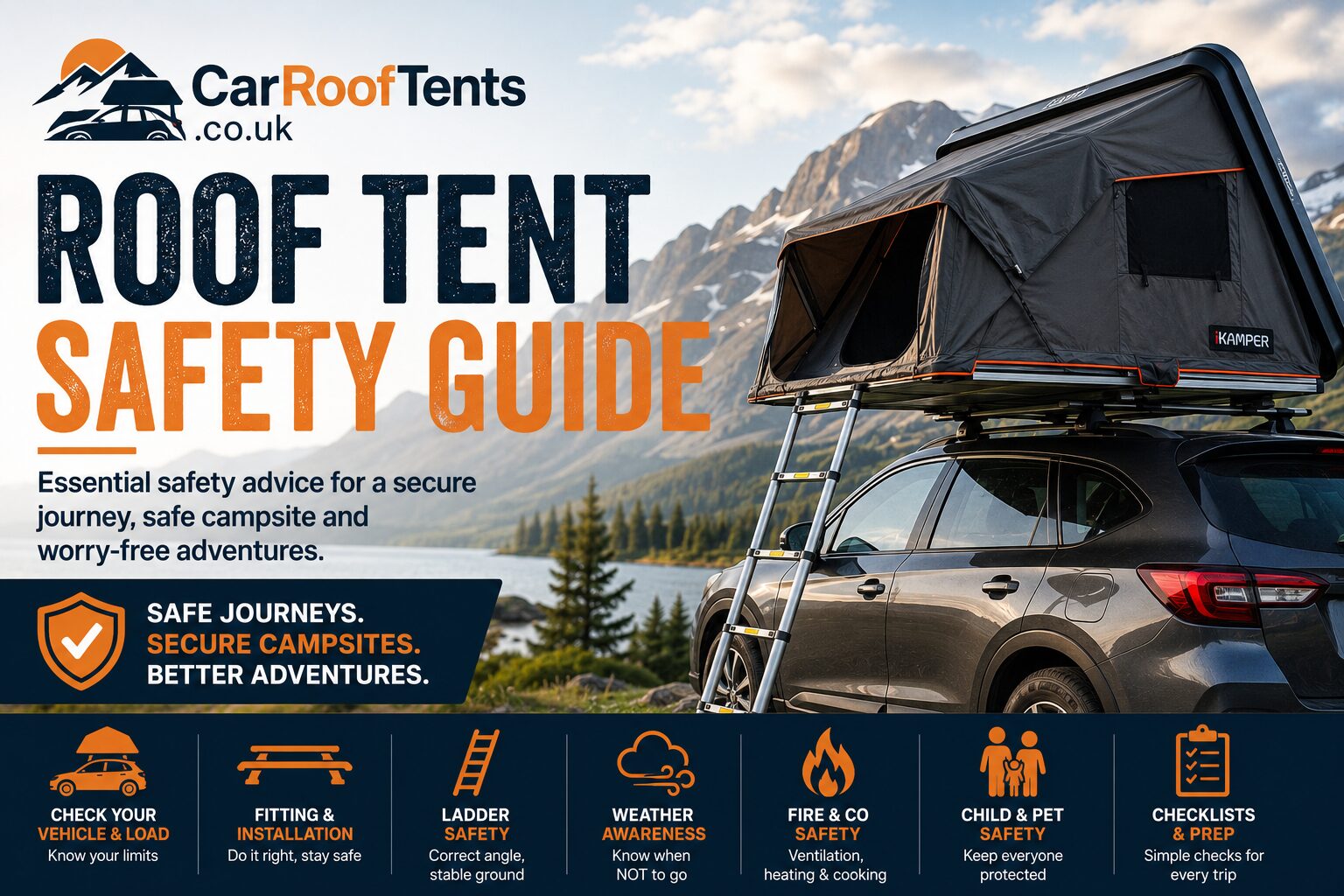
Roof tents can provide a comfortable and practical way to camp, but safe use depends on much more than simply fixing a tent to the top of a car. The vehicle, roof bars, mounting system, tent, ladder, campsite and weather all need to work together.
Most serious roof tent problems are avoidable. They usually begin with an unsuitable vehicle, incorrect load assumptions, poor fitting, loose hardware, unsafe ladder use, unsuitable weather or a failure to remember the vehicle’s increased height.
This complete UK roof tent safety guide explains how to choose, fit, drive with and use a roof tent more safely. It is intended for prospective buyers, new owners and experienced campers who want a thorough pre-trip and campsite reference.
Important: this is general information, not a replacement for the instructions supplied by the vehicle, roof-bar, rack or roof-tent manufacturer. Where instructions differ, follow the manufacturer guidance for the exact products and vehicle involved.
Quick Roof Tent Safety Checklist
- The vehicle manufacturer permits a suitable roof load.
- The complete travelling roof load is within the vehicle limit.
- The roof bars or rack are compatible and correctly rated.
- The tent is compatible with the bar shape and spacing.
- All brackets and fasteners are installed correctly.
- The tent has been checked for movement before driving.
- The closed tent, ladder, cover and latches are secured.
- The vehicle’s new total height is known and displayed to the driver.
- The driver adjusts speed and cornering for the higher centre of gravity.
- The pitch is stable, reasonably level and away from obvious hazards.
- The ladder is locked, correctly angled and on firm ground.
- Ventilation is maintained while the tent is occupied.
- Cooking, naked flames and unsafe heaters are kept out of the tent.
- Weather conditions remain within the tent manufacturer’s limits.
- Children and pets are supervised appropriately.
Are Roof Tents Safe?
Roof tents can be safe when the complete system is correctly selected, fitted, maintained and used. They are not automatically safe simply because the tent physically fits on the vehicle.
A safe roof tent setup depends on:
- the vehicle roof and mounting design;
- the manufacturer’s dynamic roof load limit;
- the roof bars or rack;
- the weight and packed dimensions of the tent;
- the mounting hardware and bar spacing;
- correct installation;
- regular inspections;
- safe driving;
- appropriate weather and campsite conditions.
The safest buying process starts with the vehicle, not the tent. Check what the car can carry, identify compatible roof bars, calculate the total travelling load and only then compare suitable tents.
Start with our Can You Put a Roof Tent on Any Car? guide and the Complete Roof Tent Buying Guide UK.
Vehicle Compatibility and Roof Tent Safety
Not every car is suitable for a roof tent. Suitability depends on more than roof size or the presence of roof rails.
Check the vehicle handbook
The vehicle handbook or manufacturer should be your first source for the maximum permitted roof load while driving. Do not rely solely on forum comments, a generic vehicle database or the fact that someone else has fitted a similar tent to a similar car.
The RAC’s roof-load safety guidance advises drivers to follow vehicle manufacturer limits, account for the weight of the rack itself and consider the effects of roof loads on handling and vehicle height.
Roof designs requiring extra caution
- panoramic or glass roofs;
- convertibles;
- vehicles with no approved roof-bar system;
- damaged or previously repaired roofs;
- very small city cars;
- vehicles with low roof-load limits;
- roof rails that are decorative rather than load-bearing;
- pickup canopies without a suitable load rating.
Raised rails, flush rails, fixed mounting points and clamp-on systems all work differently. A roof bar that is approved for one roof type may not be suitable for another.
Vehicle types
Small cars and hatchbacks: may require particularly lightweight tents, compact packed dimensions and carefully checked bar spacing.
SUVs and crossovers: often provide more roof space, but a larger vehicle does not automatically have a higher roof-load limit.
Vans: may use crossbars, tracks or full racks. Total vehicle height and access to the tent need careful thought.
Pickups: may carry a tent on the cab, canopy or bed rack. Each structure has its own rating and restrictions.
Electric vehicles: may be compatible, but owners should also consider range reduction, aerodynamic drag and manufacturer-specific roof restrictions.
Dynamic and Static Roof Loads Explained
Roof-load terminology is one of the most misunderstood parts of roof tent ownership.
Dynamic roof load
The dynamic roof load is the maximum weight the vehicle is designed to carry on its roof while moving. The vehicle is then braking, cornering, accelerating, hitting bumps and being affected by wind.
The travelling load can include:
- roof tent;
- roof bars or rack;
- mounting brackets;
- attached awnings or accessory rails;
- solar panels;
- items stored on or inside the tent where permitted.
Basic travelling-load formula:
Roof tent + roof bars or rack + mounting hardware + all roof-mounted accessories = total dynamic roof load
The total must remain within the lowest applicable limit: vehicle, roof bars, rack, feet, adapters, tracks, canopy or tent mounting system.
Roof Box’s load guidance explains that roof-bar ratings are dynamic limits and advises checking the vehicle limit and following the lower figure.
Static roof load
Static load refers to the load supported while the vehicle is parked and the tent is occupied. It may be higher than the driving limit because the vehicle is no longer experiencing the same cornering, braking and impact forces.
However, do not invent a static limit by multiplying the dynamic figure unless the vehicle, rack or tent manufacturer explicitly approves that method. The appropriate static capacity must support:
- the tent;
- all occupants;
- mattress and bedding;
- equipment kept inside;
- loads transferred through the ladder on designs where it supports the platform.
Roof bar and component limits
Every part of the support system matters. A bar may be rated highly, while the foot pack, adapter, rail or vehicle roof has a lower limit.
Roof Box’s roof-tent bar guidance says all relevant components should be checked and the lowest stated carrying capacity used.
Off-road loads
Rough tracks can create much higher forces than normal road use. Some rack manufacturers reduce permitted loads for off-road driving. Check the vehicle, rack and tent instructions before using a roof tent setup on corrugated tracks, steep terrain or severe off-road routes.
Roof Bar and Roof Rack Safety
A roof tent should be fitted to bars or a rack specifically suitable for the vehicle and tent. Bars intended only for light leisure loads may not be appropriate.
Check before buying
- vehicle compatibility;
- dynamic load rating;
- bar width and profile;
- bar spacing permitted by the tent;
- clamp clearance;
- number of bars required;
- roof-rack or platform compatibility;
- off-road restrictions;
- maximum speed instructions;
- panoramic roof restrictions.
Bar spacing
Roof tents usually specify minimum and maximum crossbar spacing. Incorrect spacing can concentrate loads, interfere with brackets or allow the tent base to flex.
Bar shape and clamp contact
Mounting brackets must sit correctly around or within the bars. Clamps should not contact curved edges, plastic trim, unsupported sections or parts of the vehicle roof.
Steel versus aluminium
Material alone does not establish suitability. Both steel and aluminium systems can be appropriate when correctly designed and rated. Use the actual product rating and roof-tent compatibility information.
Inspection
- check foot packs and vehicle attachment points;
- look for movement, corrosion and distorted parts;
- confirm locks and covers are secure;
- check mounting channels and fasteners;
- follow retightening intervals;
- inspect after rough roads or strong winds.
Safe Roof Tent Installation
Roof tents are heavy, awkward and easily capable of damaging a vehicle or injuring someone during installation. Use sufficient people or suitable lifting equipment.
Before fitting
- Confirm vehicle, bar and tent compatibility.
- Read all installation instructions.
- Check every component is present and undamaged.
- Measure and set the roof bars correctly.
- Clean contact and mounting areas.
- Plan the lift and keep bystanders clear.
- Protect the vehicle without interfering with bar attachment.
Mounting checks
- brackets are the correct way around;
- plates sit flat and square;
- bolts engage the correct amount of thread;
- no clamp contacts glass or unsupported trim;
- the tent is centred as instructed;
- the boot, tailgate and aerial still operate safely;
- the tent does not extend beyond manufacturer limits;
- all fasteners are tightened to the specified torque.
Do not substitute random bolts, plates or brackets simply because they fit. Safety-critical hardware should match the manufacturer’s specification.
After fitting
- Push the tent carefully from several directions and check for movement.
- Open and close it once before travel.
- Check ladder deployment.
- Confirm every travel latch and strap works.
- Complete a short local journey.
- Stop and recheck the installation.
- Recheck after the initial distance specified by the manufacturers.
Professional fitting is sensible where compatibility is uncertain, the tent is particularly heavy, the rack is complex or lifting cannot be completed safely.
Driving Safely with a Roof Tent
A roof tent changes the vehicle. It raises the centre of gravity, increases aerodynamic drag, adds weight and may make the vehicle more sensitive to steering inputs and crosswinds.
Adjust your driving
- accelerate smoothly;
- allow more space for braking;
- take corners more slowly;
- avoid abrupt steering;
- reduce speed in strong crosswinds;
- increase following distance;
- be cautious on exposed bridges and open roads;
- avoid sudden lane changes;
- follow any maximum speed stated by the tent or rack manufacturer.
Motorway driving
Check the tent, cover, latches and bars before joining a motorway. Stop safely if you hear new flapping, knocking, whistling or movement. Do not ignore a change in noise.
Country roads
Narrow roads may have low branches, pronounced cambers, potholes and sudden bends. Allow for the increased height and avoid brushing the tent against vegetation.
Crosswinds
Large soft-shell tents and high-profile hard shells can create more side area. Slow down, keep both hands available for steering and postpone travel if conditions become unsafe.
Rain, snow and ice
Reduced grip and visibility make the handling changes caused by a roof load more important. Remove snow and ice from the closed tent before driving so it cannot slide onto the windscreen or other road users.
Additional roof accessories
Do not add bikes, kayaks, boxes, fuel, water or recovery equipment without recalculating the complete load and confirming that the rack and tent allow the arrangement.
Vehicle Height, Barriers and Low Structures
Height damage is one of the most avoidable roof tent accidents.
Measure the vehicle after installation on level ground and include the highest fixed point. Record the height in metres and feet, and place a visible reminder inside the vehicle.
Common hazards
- multi-storey car parks;
- height-restricted car parks;
- drive-through restaurants;
- ferries and vehicle decks;
- toll booths;
- garage doors;
- workshop ramps;
- tree branches;
- campsite entrances;
- temporary event barriers.
Allow a sensible margin rather than attempting to pass beneath a structure that exactly matches the measured height. Suspension movement, road gradients, tyre pressure and roof accessories can affect clearance.
Choosing a Safe Roof Tent Pitch
A safe campsite is not only about being level. Consider the ground, surrounding hazards, escape routes and changing weather.
Choose ground that is:
- firm enough for the vehicle and ladder;
- reasonably level;
- outside flood-prone hollows;
- away from unstable banks and cliff edges;
- clear of moving traffic;
- not beneath visibly damaged branches;
- within the rules of the landowner or campsite.
Parking on a slope
A minor slope may be corrected with suitable vehicle levelling equipment where permitted, but never create an unstable setup. Apply the parking brake, select the correct gear or park position and use suitable wheel chocks where appropriate.
Do not rely on the ladder to compensate for a badly positioned or unstable vehicle.
Flood and tide risk
Being elevated does not protect the vehicle from flood water or tides. Avoid dry riverbeds, tidal areas, low coastal ground and pitches where heavy rain could isolate the vehicle.
Trees
Avoid visibly dead branches, leaning trees and unstable woodland during high winds. Falling branches can damage the tent, trap occupants or block the ladder.
Roof Tent Ladder Safety
The ladder is the main access route and, on some fold-out tents, forms part of the platform support. Incorrect setup can therefore affect both access and tent stability.
Before climbing
- confirm the ladder is fully attached;
- extend each section correctly;
- check all locks have engaged;
- set the manufacturer’s required angle;
- place both feet on firm ground;
- remove mud, ice and oil;
- keep the access area well lit;
- check the ladder is not bent or twisted.
Using the ladder
- face the ladder while climbing;
- maintain three points of contact;
- do not climb carrying bulky items;
- keep footwear clean and secure;
- do not exceed the ladder rating;
- avoid jumping from the tent;
- supervise children;
- use a head torch for night-time access.
If the ground is soft, use only a stable solution approved for ladder support. Do not balance ladder feet on loose stones, narrow blocks or improvised objects.
Night-time safety
Keep a torch or head torch within reach. Make sure the ladder cannot be mistaken for an obstruction by people walking near the vehicle, and keep the ground around it clear of guy lines, shoes and equipment.
Sleeping, Ventilation and Occupant Safety
Occupancy limits
Do not exceed the manufacturer’s occupant, mattress or static-load limits. Sleeping capacity is not determined only by whether people physically fit.
Ventilation
Keep the tent ventilated while occupied. Ventilation reduces condensation and helps prevent an uncomfortable buildup of heat and moisture.
Never block permanent vents. Use mesh panels and partially open windows where conditions allow.
Carbon monoxide
Never use a barbecue, charcoal burner, camping stove, unflued gas heater or fuel-burning appliance inside a roof tent or enclosed annex. Carbon monoxide is colourless, odourless and potentially fatal.
The NHS carbon monoxide guidance explains the symptoms of exposure and the need to move into fresh air and seek medical help if poisoning is suspected.
Emergency exit
Everyone sleeping in the tent should know:
- where the main exit is;
- how the door and mesh zips operate;
- where the ladder is;
- where a torch is kept;
- how to call for help;
- what to do if the main exit is obstructed.
Alcohol and medication
Night-time ladder use requires balance and coordination. Take extra care after alcohol or medication that causes drowsiness, dizziness or impaired movement.
Roof Tent Safety in Wind, Rain, Snow and Storms
Every roof tent has weather limitations. A tent that remains comfortable in ordinary rain may not be suitable in severe winds, deep snow or exposed mountain conditions.
Strong wind
- check the manufacturer’s wind guidance;
- avoid exposed ridges, cliffs and open coastlines;
- park to reduce side exposure where safe;
- remove awnings or accessories that increase wind loading;
- close the tent if conditions exceed safe use;
- move to safer accommodation before the situation becomes urgent.
Thunderstorms and lightning
Do not assume that elevation improves safety. Follow official weather advice, avoid exposed locations and move to an appropriate safe shelter if thunderstorms threaten.
Met Office camping guidance provides general advice for planning around weather conditions and forecasts.
Heavy rain
Check drainage, seams, cover tension and the surrounding ground. Be prepared to move if flooding or access problems are possible.
Snow
Snow adds weight to the tent and can block openings. Do not allow significant accumulation unless the manufacturer explicitly states the tent is designed for it. Clear snow safely and avoid damaging the fabric or shell.
Heat
A closed roof tent can become extremely hot. Do not leave children or pets inside an unventilated tent. Use shade where practical, maintain airflow and monitor occupants.
When not to use the tent
Do not deploy the roof tent when weather, ground, vehicle condition or equipment damage makes safe use doubtful. Alternative accommodation is preferable to trying to prove the tent can withstand conditions beyond its intended use.
Fire, Heating, Cooking and Electrical Safety
Cooking
Cook outside the tent and away from fabric, ladders, awnings, fuel containers and the vehicle. Follow campsite fire rules and appliance instructions.
Heaters
Do not use unapproved fuel-burning heaters inside the tent. Even where an appliance is marketed for camping, check the tent and appliance instructions, ventilation requirements and carbon-monoxide risks.
Power stations and batteries
- use undamaged equipment from reputable manufacturers;
- keep ventilation openings clear;
- avoid charging on bedding;
- do not cover power stations;
- keep equipment dry;
- stop using batteries that are swollen, hot, damaged or giving off odour;
- use appropriate cables and fuses.
Smoking and naked flames
Do not smoke, use candles or operate naked flames in or immediately beside the roof tent.
Useful fire equipment
A suitable fire extinguisher and fire blanket may be useful around a camping setup, but they do not make unsafe cooking or heating practices acceptable. Learn how to use them before an emergency.
Roof Tent Safety for Children
Whether a roof tent is appropriate for a child depends on age, behaviour, ladder confidence, sleeping arrangements and the tent design.
Key precautions
- supervise ladder use;
- teach children to face the ladder;
- do not allow play on the ladder or roof;
- keep the ladder area lit and clear;
- place younger children away from openings;
- check windows and doors are correctly secured;
- plan night-time toilet trips;
- keep a responsible adult close enough to assist;
- do not exceed sleeping or weight limits.
Do not assume fabric windows or insect mesh function as fall-protection barriers. Children should understand that they must not lean, push or climb against them.
Roof Tent Safety for Dogs and Other Pets
Many dogs cannot safely climb a roof tent ladder. Carrying a dog up or down also creates a fall risk for both the animal and owner.
Consider:
- the animal’s size and mobility;
- whether safe lifting is possible;
- heat inside the tent;
- the risk of jumping from an opening;
- claws damaging mesh or fabric;
- night-time movement;
- an alternative sleeping area in the vehicle or annex.
Never leave a pet unattended in a hot or poorly ventilated roof tent. Secure doors and windows without blocking ventilation.
Maintenance as Part of Roof Tent Safety
Regular maintenance supports safe travel and use. Before journeys, check the shell or travel cover, latches, straps, mounting clamps, roof bars and ladder.
Inspect periodically for:
- loose or missing fasteners;
- corrosion;
- cracked brackets;
- distorted roof bars;
- fabric trapped in hinges;
- damaged latches or straps;
- worn ladder locks;
- weak gas struts;
- shell cracks;
- water ingress and mould.
Our Roof Tent Maintenance Guide UK provides a complete cleaning, drying, storage and inspection schedule.
Stop using the tent if a defect could affect mounting security, ladder safety, structural support or safe closure while driving.
Roof Tent Emergency Situations
Unexpected movement while driving
Slow down gradually, stop in a safe place and inspect the tent, bars and mounting hardware. Do not continue simply because the tent still appears attached.
Height impact
Stop safely and inspect the tent, rack, bars and vehicle roof. Hidden damage can exist even when the shell only appears scratched. Do not open or drive with the tent until the setup has been assessed.
Broken ladder
Do not jump from the tent. Call for assistance, use an alternative safe exit if the design provides one and replace the ladder with an approved component.
Severe weather
Close the tent early where possible and move to safer shelter. Do not wait until wind or flooding makes packing impossible.
Fire
Alert everyone, leave immediately and call 999. Do not delay escape to retrieve belongings or attempt to save the tent.
Medical emergency
Explain to emergency services that the casualty is in an elevated tent. Avoid moving a seriously injured person down the ladder unless there is immediate danger.
Vehicle accident
After any collision that may have loaded or twisted the roof, bars or rack, have the full setup inspected before reuse.
Common Roof Tent Safety Mistakes
- Buying a tent before checking the vehicle roof-load limit.
- Forgetting to include the weight of roof bars and accessories.
- Assuming “universal” means suitable for every vehicle.
- Using bars that are not approved for a roof tent.
- Ignoring minimum and maximum bar spacing.
- Using improvised mounting hardware.
- Overtightening or undertightening brackets.
- Failing to recheck fasteners after fitting.
- Driving with fabric trapped outside the shell or cover.
- Leaving a ladder or accessory unsecured.
- Forgetting the vehicle’s new height.
- Driving too quickly in crosswinds.
- Adding roof-mounted gear without recalculating the load.
- Parking on unstable or flood-prone ground.
- Using the ladder at the wrong angle.
- Allowing children to play on the ladder.
- Cooking or using fuel-burning heaters inside.
- Blocking ventilation.
- Ignoring severe weather warnings.
- Continuing to use damaged gas struts, hinges or ladder locks.
- Leaving pets unattended in hot conditions.
- Assuming a high purchase price guarantees compatibility.
- Failing to tell the motor insurer.
Roof Tent Safety Equipment Checklist
- Vehicle handbook and roof-bar instructions.
- Roof tent fitting and user manual.
- Correct torque wrench and sockets where specified.
- Approved spare mounting hardware.
- Head torches and spare batteries.
- First-aid kit.
- Charged mobile phone and backup power.
- Suitable fire extinguisher and fire blanket.
- Wheel chocks where appropriate.
- Reflective vest and warning equipment.
- Emergency contact details.
- Weatherproof footwear.
- Visible vehicle-height reminder.
- Maintenance and inspection record.
Pre-Journey Roof Tent Safety Check
| Check | What to confirm |
|---|---|
| Tent closure | Fully closed with no fabric trapped outside. |
| Latches and straps | All secured and undamaged. |
| Travel cover | Correctly fitted with no loose edges. |
| Mounting brackets | Present, correctly positioned and tightened as specified. |
| Roof bars or rack | No movement, damage or loose feet. |
| Ladder | Secured in its travel position. |
| Accessories | Within load limits and secured. |
| Vehicle height | Known by the driver. |
| Weather | Suitable for the planned route. |
| First stop | Plan to recheck after fitting or adjustments. |
Roof Tent Safety Frequently Asked Questions
Can a roof tent fall off a car?
A correctly matched and installed tent should remain secure, but failure is possible if bars, clamps or fasteners are unsuitable, damaged, loose or overloaded. Inspect the setup regularly.
Can roof bars fail?
Yes. Bars, feet, adapters or vehicle mounting points can be damaged or overloaded. Use approved components and follow the lowest relevant load limit.
Are roof tents safe for small cars?
Some lightweight tents may suit some small cars, but compatibility must be confirmed from the vehicle roof load, roof design, bar options and tent requirements.
Can a roof tent damage the vehicle roof?
Damage is more likely when the vehicle is unsuitable, the load is excessive, bars are incorrectly fitted or dirt and movement occur around contact points.
Can you exceed the dynamic roof load when parked?
Occupants add load only when parked, but the static capacity must still be sufficient and confirmed by appropriate manufacturer guidance.
Is it safe to sleep in a roof tent in strong wind?
Only within the manufacturer’s weather limits and in an appropriate location. Close the tent and seek safer shelter if conditions become excessive.
Is a hard-shell tent safer than a soft-shell tent?
Not automatically. Safety depends on compatibility, installation, weather limits, design and correct use rather than shell type alone.
Can children sleep in a roof tent?
Many families use roof tents, but children need suitable sleeping arrangements, ladder supervision and clear rules around openings and climbing.
Can a dog sleep in a roof tent?
It may be possible for some dogs, but safe access, heat, jumping risk and fabric damage must be considered. An alternative sleeping area may be safer.
Can you use a camping heater in a roof tent?
Fuel-burning heaters create fire and carbon-monoxide risks. Do not use them unless both the appliance and tent manufacturers explicitly permit the exact arrangement and all safety requirements are met.
Can you cook inside a roof tent?
No. Keep cooking appliances and naked flames outside and safely away from tent fabric and the vehicle.
Is a roof tent safe during lightning?
Follow official storm guidance and move to appropriate shelter. Avoid exposed locations and do not assume the elevated tent is a safe place during a thunderstorm.
How often should mounting bolts be checked?
Follow the tent, bar and vehicle instructions. Check after initial fitting, before trips, after rough roads and whenever noise or movement is noticed.
Can a roof tent be used on a slope?
A small slope may sometimes be levelled safely, but the vehicle and ladder must remain stable. Avoid steep, soft or unstable ground.
What happens to a roof tent in a crash?
A roof tent becomes part of the vehicle’s external load. Correct mounting is essential, but any collision can damage the tent, rack or roof. Have the setup assessed before reuse.
Should I tell my insurer about a roof tent?
Yes. Tell the motor insurer about the tent, bars or rack and ask how theft, accidental damage, contents and modifications are covered.
Choose a Roof Tent with Safety in Mind
Safety should be part of the buying decision from the beginning. Compare:
- tent weight;
- packed dimensions;
- bar-spacing requirements;
- mounting hardware;
- ladder design;
- occupant capacity;
- weather guidance;
- replacement-part availability;
- UK warranty and fitting support.
Use our UK roof tent comparison tool to compare current models, then use the Complete Roof Tent Buying Guide to check the wider ownership considerations.
Anyone considering a second-hand tent should also read the Used Roof Tents Guide UK before purchasing.
Help Build a Better UK Roof Tent Safety Resource
CarRoofTents.co.uk is being developed as an independent UK roof tent research and comparison website.
This guide can be strengthened over time with:
- real installation photographs;
- manufacturer-specific fitting examples;
- roof-bar inspection diagrams;
- vehicle-height case studies;
- ladder setup photographs;
- weather testing;
- owner safety experiences;
- incident-prevention case studies;
- printable journey and campsite checklists.
Research, manufacturer information, owner contributions and future hands-on testing should be clearly identified so readers understand the source of each recommendation.
Editorial and Safety Notice
This guide provides general information and cannot confirm that a specific vehicle, roof-bar system or roof tent is safe or compatible.
Check the current instructions and limits supplied by the vehicle manufacturer, roof-bar or rack manufacturer and roof-tent manufacturer. Where information is missing or contradictory, obtain written confirmation before fitting or using the tent.