Roof Bars for Roof Tents UK | What Roof Bars Do You Need?

Last Updated on 2 months ago by admin
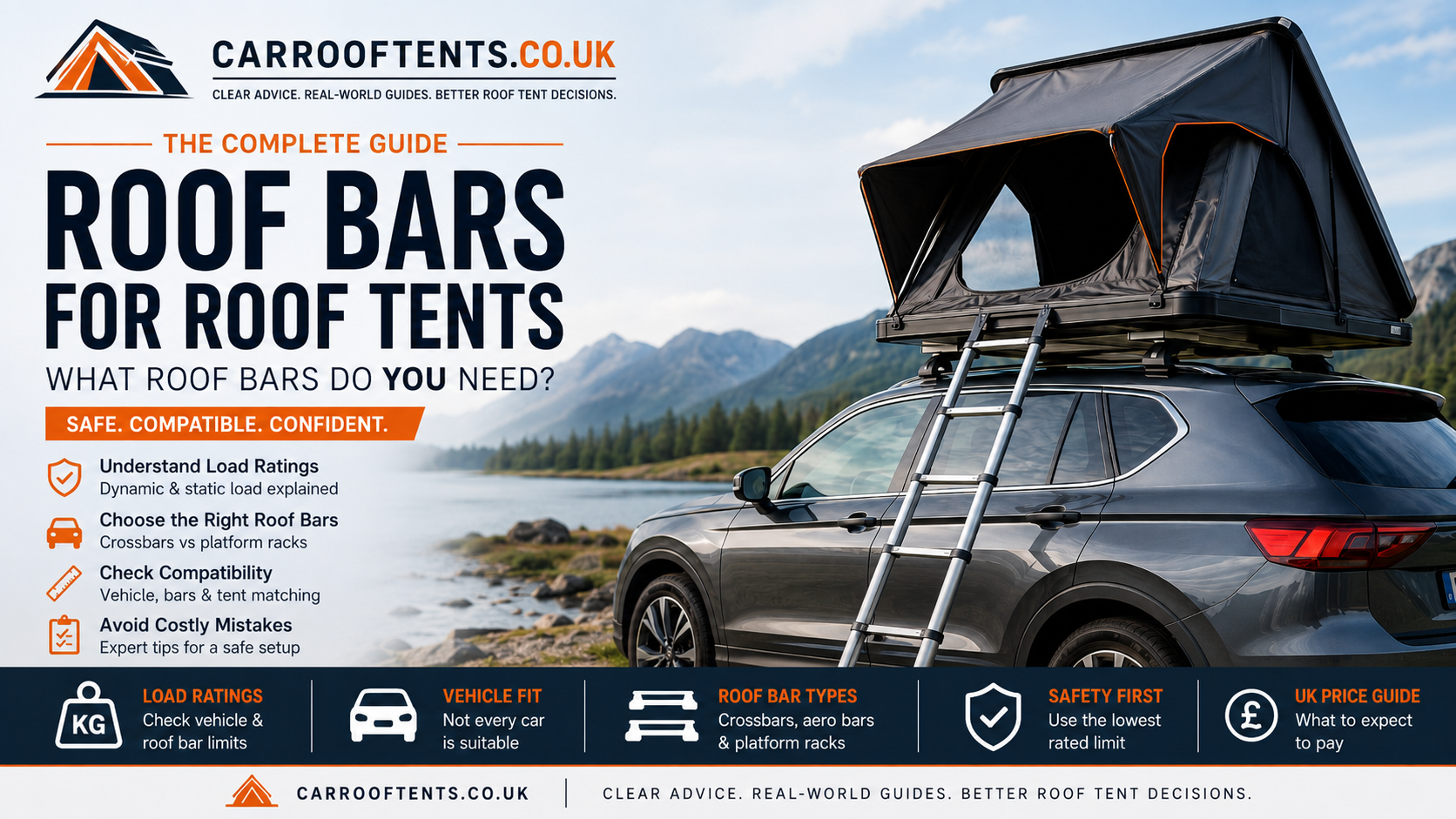
Roof Bars for Roof Tents: What Do You Actually Need?
Choosing a roof tent is exciting, but choosing the right roof bars is just as important.
A roof tent does not simply sit on your car roof. It needs to be mounted to suitable roof bars, crossbars or a roof rack system that can safely support the tent while driving and remain secure when the vehicle is parked. Get this wrong and you could damage your vehicle, overload your roof system or end up with a setup that is unsafe on the road.
This guide explains what roof bars you need for a roof tent, what weight ratings matter, how to check compatibility and what UK buyers should understand before ordering.
This is not a substitute for manufacturer fitting advice. Always check your vehicle handbook, roof bar instructions and roof tent fitting guidance before buying or fitting anything.
Why Roof Bars Matter for Roof Tents
Roof bars are the connection between your vehicle and your roof tent. They need to do three things well:
They must fit your specific vehicle roof type.
They must be rated to carry the roof tent while driving.
They must allow the tent to be mounted securely using the manufacturer’s fixing system.
A normal set of roof bars used for a roof box or bike carrier may not automatically be suitable for a roof tent. Roof tents are heavier, bulkier and create different forces when driving, braking, cornering and facing crosswinds.
Many roof tent and roof rack specialists refer to a minimum dynamic load rating of around 75kg for roof tent use, although the correct figure depends on the actual tent weight, vehicle rating and roof bar system. Roofbox states that both the vehicle and roof bars should have a suitable dynamic carrying capacity, and that all components should be checked with the lowest rated part treated as the limit. (support.roofbox.co.uk) Thule also says rooftop tent crossbar systems must be certified for at least 75kg / 165lb dynamic capacity, or more if the tent itself exceeds that weight. (help.thule.com)
The Three Ratings You Need to Understand
Before buying roof bars for a roof tent, you need to understand three separate ratings.
1. Vehicle roof load limit
This is the maximum weight your vehicle roof is rated to carry while driving. It is usually found in the vehicle handbook or by asking the manufacturer or dealer.
For roof tent buyers, this matters because the tent sits on top of the car while the vehicle is moving. TentBox explains that the vehicle’s dynamic roof load limit needs to be equal to or greater than the weight of the roof tent being installed. (TentBox)
2. Roof bar load rating
Your roof bars also have their own maximum load rating. This may depend on the bar, foot pack, clamp kit, vehicle fitting kit and roof type.
If your vehicle roof is rated to 75kg but your roof bars are only rated to 60kg, your practical limit is 60kg.
Always work to the lowest rated part of the system.
3. Static load
Static load is the weight supported when the vehicle is parked. This is where the weight of the tent, sleepers and some bedding becomes relevant.
Static load is different from dynamic load. However, many vehicle handbooks only clearly list dynamic roof load, not static roof load. That means roof tent buyers should be cautious and check guidance from the vehicle manufacturer, roof bar manufacturer and roof tent manufacturer before assuming a setup is suitable.
Dynamic Load vs Static Load: Plain-English Explanation
Dynamic load is the weight your roof system carries while driving.
Static load is the weight your roof system supports when parked.
For example, while driving, your roof may only be carrying:
- Roof tent
- Roof bars
- Mounting hardware
When parked, the setup may also support:
- One or more people
- Bedding
- Some internal gear
This is why roof tent compatibility can be confusing. The roof tent may weigh 55kg, but the sleeping load could be much higher once people are inside. The key point is this: do not assume that because a tent fits physically, it is suitable for your car.
What Type of Roof Bars Are Best for Roof Tents?
Most roof tents are mounted to one of three common systems.
1. Heavy-duty crossbars
These are often the best choice for many car roof tent setups. They are stronger than basic budget bars, usually have better mounting options and are commonly used for heavier loads.
Best for:
SUVs, estates, pickups, vans and larger cars with suitable roof ratings.
Pros:
- Stronger than many basic roof bars
- Often suitable for roof tent mounting
- Easier to remove than a full platform rack
- Usually cheaper than a full expedition rack
Cons:
- Not every heavy-duty bar fits every car
- Some systems require specific foot packs or adapters
- Wind noise can increase
- Height increases once tent is fitted
Typical UK price range:
Around £200–£500+, depending on brand, vehicle and fitting kit.
2. Aerodynamic roof bars
Aero bars are popular because they look neater and can reduce wind noise compared with traditional square bars. Some premium aero bars have strong load ratings and may be suitable for roof tents, but you must check the exact model.
For example, some Thule WingBar Evo listings show a 100kg max load, but compatibility still depends on the full vehicle-specific fitting system and manufacturer guidance. (Halfords UK)
Best for:
Drivers who want a neater everyday setup and have a lighter roof tent.
Pros:
- Neater appearance
- Often quieter than square bars
- Good for regular road use
- Commonly available from UK retailers
Cons:
- Not all aero bars are suitable for every roof tent
- Curved bar profiles may not suit every tent clamp
- You still need to check dynamic load rating carefully
Typical UK price range:
Around £150–£350+ for bars, often more once foot packs and fitting kits are included. Halfords, for example, lists Thule WingBar Evo bars from around the low hundreds for the bars alone, before vehicle-specific parts in many cases. (Halfords UK)
3. Full roof racks or platform racks
A full platform rack can be the strongest and most practical option for overland-style vehicles, vans, 4x4s and serious touring setups.
These systems are often used where the driver wants to carry a roof tent plus accessories such as awnings, recovery boards, storage boxes or lighting. Front Runner/Dometic describes its platform racks as suitable for mounting rooftop tents, awnings, solar panels and other expedition accessories. (Dometic)
Best for:
4x4s, pickups, campervans, overland vehicles and frequent roof tent users.
Pros:
- Strong and versatile
- Good for heavier setups
- Useful for accessories
- Can spread load across a larger area
- Often better for touring and off-road-style builds
Cons:
- More expensive
- Heavier than simple bars
- More permanent
- May increase fuel use and wind noise
- Can make height restrictions more of an issue
Typical UK price range:
Around £500–£1,500+, depending on vehicle, brand and rack size. Some Front Runner-style vehicle-specific racks can exceed £1,500. (Maverick 4×4)
Can You Use Cheap Roof Bars for a Roof Tent?
Sometimes, but you need to be very careful.
Cheap roof bars are not automatically unsafe, but they are often designed for lighter, general-purpose loads such as roof boxes, ladders or occasional luggage. A roof tent is a more demanding use case.
Avoid buying roof bars purely because they are cheap. Instead, check:
- Vehicle compatibility
- Dynamic load rating
- Foot pack strength
- Clamp or fixing method
- Bar width and spacing
- Whether the tent manufacturer approves that bar type
- Whether replacement parts are easily available
- Whether fitting instructions clearly state the load limit
For a roof tent, saving £80–£100 on bars is rarely worth it if the setup is harder to fit, noisy, unstable or poorly rated.
How Many Roof Bars Do You Need for a Roof Tent?
Most roof tents are fitted to two crossbars, but this depends on the tent and vehicle.
Some larger or heavier tents may require specific bar spacing, wider bars, stronger crossbars or a platform rack. Always check the roof tent fitting instructions.
You need to confirm:
- Minimum bar spacing
- Maximum bar spacing
- Bar width
- Bar profile
- Clamp compatibility
- Whether the tent base clears the roof
- Whether the boot can still open
- Whether the aerial, spoiler or panoramic roof causes issues
Do not assume “two bars equals suitable.” The spacing and rating matter.
Roof Bar Spacing: Why It Matters
Roof bar spacing is the distance between the front and rear bar.
If the bars are too close together, the tent may not be properly supported. If they are too far apart, the tent mounting rails may not line up correctly. Some vehicles with fixed mounting points give you limited adjustment, so this needs checking before buying.
This is especially important for:
- Small hatchbacks
- Coupés
- Cars with short rooflines
- Panoramic roof models
- Vehicles with factory fixed points
- Cars with spoilers or high tailgates
A lightweight roof tent may physically fit on a small car, but the available bar spacing may still make it unsuitable.
Are Factory Roof Rails Enough?
Factory roof rails are not the same as roof bars.
Many SUVs and estates have raised rails or flush rails running from front to back. These rails usually need crossbars fitted across them before a roof tent can be mounted.
You need to check both:
- The factory rail rating
- The crossbar system rating
Some factory rails are strong. Others are mainly designed for lighter accessories. The vehicle handbook should explain the roof load limit, but you may still need advice from the roof bar and tent manufacturers.
Are Panoramic Roofs Suitable for Roof Tents?
Some vehicles with panoramic glass roofs may still be able to carry roof bars or a roof tent, but this needs extra caution.
Potential issues include:
- Reduced roof load rating
- Limited approved fixing points
- Glass clearance
- Roof flex
- Manufacturer restrictions
- Warranty concerns
- Higher repair cost if damaged
If your vehicle has a panoramic roof, do not guess. Check the handbook and ask the vehicle manufacturer or a professional roof bar fitter before buying.
Roof Bars for Small Cars
Small cars can sometimes carry roof tents, but they need careful checking.
The main issues are:
- Lower roof load limits
- Shorter roof length
- Reduced bar spacing
- Smaller mounting area
- More noticeable handling changes
- Less margin for heavy tents
A small hatchback may be better suited to a lightweight compact roof tent rather than a large hard shell or family model.
Best suited to:
Solo campers, couples, lightweight tents and occasional trips.
Should avoid:
Large family tents, heavy hard shell tents, big annex setups and overloaded camping gear.
Suggested internal link: Best Roof Tents for Small Cars
Roof Bars for SUVs, Estates and Crossovers
SUVs and estates are often better suited to roof tent use than small hatchbacks, but they still need proper checks.
Many have factory rails, longer rooflines and better roof load ratings, but this does not mean every setup is automatically suitable.
Best suited to:
Couples, families, regular campers and mid-weight roof tents.
Should avoid:
Assuming factory rails are enough without checking crossbar and vehicle limits.
Suggested internal links:
- Can You Put a Roof Tent on Any Car?
- Roof Tent Weight Limits Explained
- Best Family Roof Tents
Roof Bars for Vans, Pickups and 4x4s
Vans, pickups and 4x4s can be excellent roof tent platforms, especially with a full rack or load bar system.
They may allow:
- Larger tents
- Family tents
- Awnings
- Storage boxes
- Recovery boards
- Touring equipment
However, taller vehicles bring their own issues. Ladder access, total vehicle height, wind exposure and multi-storey car parks all become more important.
Best suited to:
Touring, overlanding, family camping, longer trips and frequent use.
Should avoid:
Ignoring height, weight and wind noise once the tent and rack are fitted.
Suggested internal link: Best Roof Tents for SUVs, Vans and Pickups
Roof Bar Price Guide UK
| Setup type | Typical UK price range | Best for |
|---|---|---|
| Basic roof bars | £80–£180 | Light general use, not always roof tent suitable |
| Good quality aero bars | £150–£350+ | Lighter roof tents and everyday vehicles |
| Heavy-duty crossbars | £200–£500+ | Roof tents, heavier loads and stronger setups |
| Platform roof rack | £500–£1,500+ | Vans, 4x4s, overland builds and accessories |
| Professional fitting | £20–£100+ | Buyers who want fitting checked properly |
Prices vary by vehicle, brand, fitting kit and whether you already have rails or fixed points. Halfords also promotes vehicle compatibility tools and fitting services for roof bars, which can be useful for buyers who are unsure what fits their car. (Halfords UK)
Common Roof Bar Mistakes to Avoid
Buying bars before choosing the tent
Choose the tent and roof bars together. The tent weight, mounting rail design and required bar spacing all matter.
Only checking the roof bar rating
You must check the vehicle roof limit too. The safest working limit is the lowest rated part of the system.
Forgetting the weight of the bars
The total roof load includes the tent, bars and mounting hardware while driving.
Assuming all roof bars fit all cars
Roof bars are vehicle-specific. The foot pack, clamps and fitting kit matter.
Ignoring total vehicle height
A roof tent can add significant height. This matters for car parks, drive-throughs, ferries, garages, campsites and low branches.
Not checking fixings after driving
Roof tent fixings should be checked regularly, especially after the first few journeys, long motorway trips or rough roads.
The RAC advises drivers to understand roof weight limits, safe loading and roof rack precautions before travelling with loads on the roof. (RAC)
Roof Bars vs Roof Rack: Which Should You Choose?
Choose roof bars if you want a simpler, cheaper and more removable setup for occasional or regular roof tent use.
Choose a platform roof rack if you want a stronger, more permanent touring setup with extra accessories.
Roof bars may be better if:
- You use the tent occasionally
- You drive a car or SUV
- You want lower cost
- You want easier removal
- You only need to carry the tent
A platform rack may be better if:
- You use the tent frequently
- You drive a van, pickup or 4×4
- You want to carry awnings or accessories
- You want a more expedition-style setup
- You need more mounting flexibility
Roof Tent Roof Bar Checklist
Before buying, check the following:
- What is your vehicle’s maximum roof load limit?
- What is the roof tent’s weight?
- What do the roof bars weigh?
- What is the roof bar dynamic load rating?
- What is the lowest rated part of the full system?
- Does the bar spacing match the roof tent fitting instructions?
- Does the tent clamp fit the bar profile?
- Will the boot open with the tent fitted?
- Does your car have a panoramic roof, spoiler or aerial issue?
- Will the total vehicle height cause problems?
- Does your insurer need to know about the roof tent?
- Are you confident fitting it yourself, or should you use a professional?
Who This Page Is Best For
This guide is best for:
- First-time roof tent buyers
- Drivers unsure what roof bars they need
- Families comparing heavier roof tents
- Small car owners checking compatibility
- Anyone choosing between crossbars and a platform rack
- Buyers looking at used roof tents and needing to check fittings
Who Should Be Extra Cautious
You should take extra care if:
- Your vehicle has a low roof load rating
- Your car has a panoramic glass roof
- You want a large family roof tent
- You plan to drive off-road
- You already own old roof bars with unclear ratings
- Your bars were bought second-hand without instructions
- Your vehicle has short roof bar spacing
- Your roof tent weighs more than 75kg
In these cases, get advice from the roof bar manufacturer, roof tent supplier, vehicle manufacturer or a professional fitter.
Final Advice: Do Not Guess With Roof Bars
The right roof bars can make a roof tent setup safe, practical and enjoyable. The wrong bars can make the whole setup unsuitable.
Before buying a roof tent, always check:
- Vehicle roof load limit
- Roof bar dynamic load rating
- Tent weight
- Bar spacing
- Fitting method
- Manufacturer instructions
- Total vehicle height
- Insurance requirements
A roof tent is not just camping equipment. It is a heavy item attached to your vehicle at speed, so compatibility and fitting need to be treated seriously.
Start with your vehicle handbook, then compare suitable roof bars and tents together. If anything is unclear, ask before buying.
Suggested Internal Links
- Complete Roof Tent Buying Guide UK
- Can You Put a Roof Tent on Any Car?
- Roof Tent Weight Limits Explained
- Best Roof Tents for Small Cars
- Best Family Roof Tents
- Hard Shell vs Soft Shell Roof Tents
- Used Roof Tent Buying Guide UK
- Roof Tent Fitting Guide
FAQ
Do you need special roof bars for a roof tent?
You need roof bars or a roof rack that are suitable for your vehicle, the tent weight and the tent’s mounting system. Not every set of roof bars is suitable for roof tent use.
Is 75kg enough for a roof tent?
Many roof tent systems refer to 75kg as a common minimum dynamic load rating, but the correct answer depends on your tent weight, vehicle roof limit and roof bar rating. If the tent weighs more than 75kg, both the vehicle and bars need to be rated accordingly.
Can I put a roof tent on factory roof rails?
Usually not directly. Factory rails normally need suitable crossbars fitted across them. You also need to check the vehicle roof load limit and the rating of the rail and bar system.
Are Thule roof bars suitable for roof tents?
Some Thule systems may be suitable, depending on the vehicle, bar type, fitting kit and tent weight. Always check the specific Thule system rating and the roof tent manufacturer’s mounting guidance.
Can I use second-hand roof bars for a roof tent?
You can, but only if you can confirm the exact model, vehicle fitment, condition, load rating and fitting instructions. Avoid used bars with missing parts, damaged clamps, unclear ratings or no fitting documentation.
Do roof bars affect fuel economy?
Yes, roof bars and roof tents can increase drag, wind noise and fuel use. A roof tent will usually have a bigger effect than roof bars alone because of its size and weight.
Should I remove roof bars when not using the roof tent?
If you do not need them, removing roof bars can reduce wind noise, drag and fuel use. It can also reduce the risk of forgetting your increased vehicle height.