
Roof Tent vs Campervan UK | Which Is Better for Camping and Road Trips?

Last Updated on 2 months ago by admin
Roof Tent vs Campervan: Which Is Better for UK Camping and Road Trips?
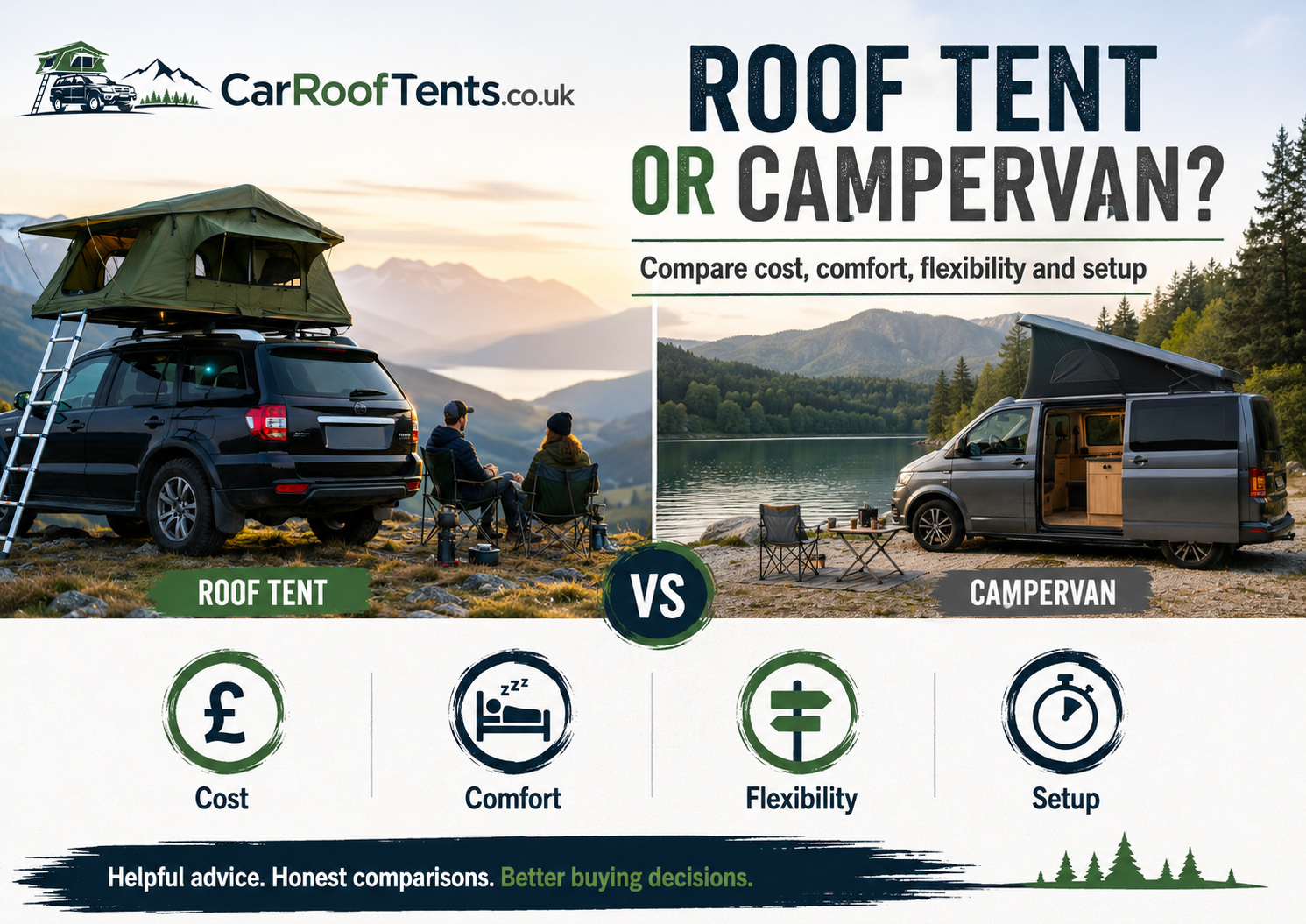
A roof tent and a campervan can both give you more freedom than a traditional tent, but they are very different ways to travel and camp.
A roof tent turns your existing car, SUV, van, pickup or 4×4 into a raised sleeping setup. A campervan gives you a more complete living space, usually with a bed, storage, cooking area and sometimes a sink, fridge, heater, toilet or pop-top roof.
Both can be brilliant. Both can also be wrong for the wrong buyer.
The best choice depends on your budget, vehicle, storage space, family size, comfort expectations, camping style and how often you plan to travel.
This guide compares roof tents and campervans in plain English so you can decide which setup makes more sense for your real life.
Quick Answer: Is a Roof Tent Better Than a Campervan?
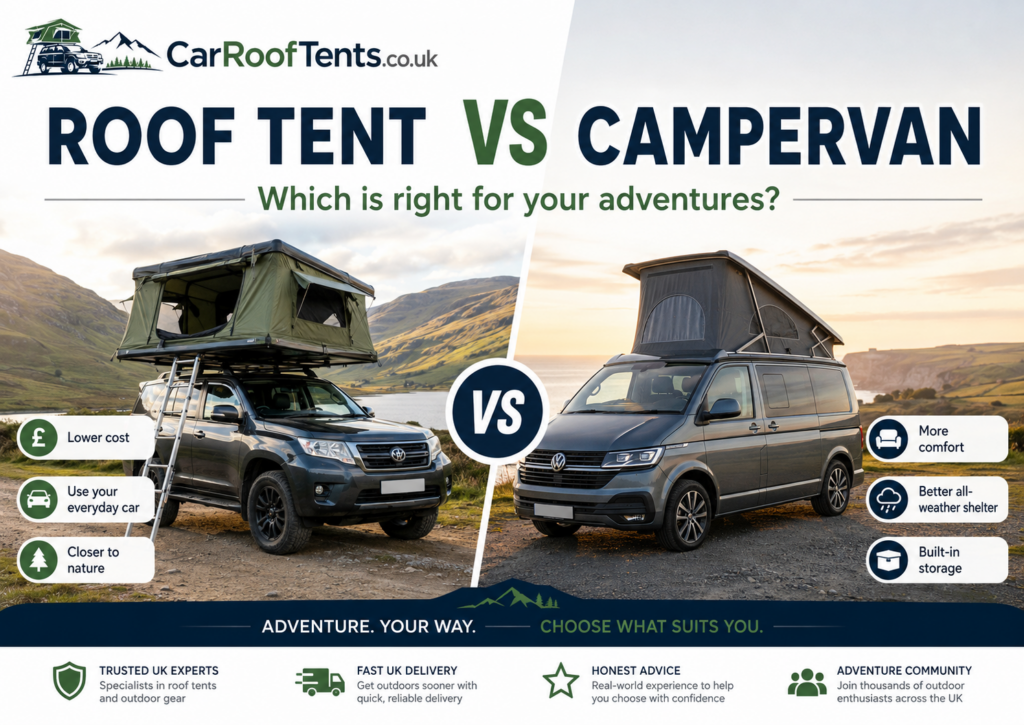
A roof tent is usually better if you want a lower-cost, flexible camping setup that works with a car you already own.
A campervan is usually better if you want more comfort, indoor living space, cooking facilities, storage and a proper “home on wheels” experience.
Choose a roof tent if:
- You already own a suitable car, SUV, van or 4×4.
- You want to spend less than a campervan.
- You mostly camp at campsites.
- You do not need an indoor kitchen or toilet.
- You want a setup that can be removed when not in use.
- You like simple weekend trips, road trips and summer camping.
- You are happy climbing a ladder to sleep.
Choose a campervan if:
- You want indoor living space.
- You want a proper seated area, kitchen or storage.
- You camp regularly or travel for longer periods.
- You want easier access in bad weather.
- You need more comfort for children, pets or older campers.
- You want somewhere to sit, cook or change indoors.
- You are comfortable with higher purchase and ownership costs.
Simple verdict
For lower cost and flexibility, choose a roof tent.
For comfort and all-weather living, choose a campervan.
For families, a campervan is usually more practical, but a large roof tent with an awning can still work well.
For occasional campers, a roof tent is usually the better starting point.
For long tours and year-round use, a campervan is usually easier to live with.
Roof Tent vs Campervan: Quick Comparison
| Feature | Roof Tent | Campervan |
|---|---|---|
| Typical upfront cost | Lower | Much higher |
| Uses existing vehicle | Yes, if suitable | Usually a separate or converted vehicle |
| Daily driving | Your normal car remains usable | Van may become your main vehicle |
| Sleeping comfort | Good, but compact | Usually better |
| Indoor living space | No, unless using awning/annex | Yes |
| Cooking space | Outside or under awning | Often inside or at rear |
| Toilet/shower options | Separate camping gear needed | Possible depending on conversion |
| Storage | Limited | Much better |
| Bad weather practicality | More exposed | Better |
| Setup time | Fast, but still needs opening | Very fast once parked |
| Family practicality | Possible, but limited | Usually better |
| Purchase risk | Lower | Higher |
| Running costs | Lower | Higher |
| Insurance | Usually declare tent/bars | Dedicated policy often needed |
| Best for | Weekend trips, budget adventures, flexible camping | Longer trips, comfort, touring, year-round use |
What Is a Roof Tent?
A roof tent is a tent that mounts to suitable roof bars or a roof rack on top of your vehicle. It usually opens by folding out, popping up or lifting on gas struts.
Most roof tents include:
- Built-in mattress
- Ladder
- Fabric sleeping area
- Windows and ventilation
- Mounting hardware
- Travel cover or hard shell
A roof tent is not fitted directly to a bare roof. Your vehicle needs suitable bars or a rack, and the whole setup must work with your vehicle’s roof load limit.
Roof tent buyers need to understand static and dynamic roof load: the Camping and Caravanning Club explains that the static limit applies when parked with people inside the tent, while the dynamic load limit applies when the vehicle is on the road. It also advises buyers to include roof bars or racks in their weight calculations. (campingandcaravanningclub.co.uk)
What Is a Campervan?
A campervan is a van that has been designed or converted to provide sleeping and living facilities. Depending on the layout, it may include:
- Bed
- Seats
- Table
- Kitchen unit
- Sink
- Fridge
- Gas or electric cooking
- Storage cupboards
- Leisure battery
- Solar panel
- Pop-top or high roof
- Heating
- Toilet or shower in larger conversions
Some campervans are factory-built, some are professionally converted and others are DIY conversions. If a vehicle is converted and the owner wants the V5C body type changed to “motor caravan”, DVLA says the vehicle must meet its body type policy, including exterior features recognisable as a motor caravan; DVLA also states that the body type classification is for vehicle appearance and identification, not insurance category or speed limits. (GOV.UK)
Cost: Roof Tent vs Campervan
Cost is one of the biggest differences.
A roof tent setup may cost from hundreds to several thousand pounds depending on the tent, roof bars, fitting and accessories.
A campervan can cost many times more. In a 2025 UK campervan buying article, The Guardian reported that used campervans can be found below £10,000, while new vehicles can range from around £40,000 for entry-level models to more than £85,000 for high-end examples. (The Guardian)
Typical roof tent costs
| Item | Typical Cost Range |
|---|---|
| Budget roof tent | £700–£1,200 |
| Mid-range roof tent | £1,200–£2,000 |
| Premium roof tent | £2,000–£4,000+ |
| Roof bars or rack | £150–£1,000+ |
| Fitting, locks and accessories | £100–£800+ |
Typical campervan costs
| Campervan Type | Typical Cost Range |
|---|---|
| Older used campervan | Under £10,000 possible, condition varies |
| Used modern conversion | Often £20,000–£50,000+ |
| New entry-level campervan | Around £40,000+ |
| Premium new campervan | £60,000–£85,000+ |
| Bespoke conversion | Varies widely depending on base van and specification |
Cost verdict
A roof tent is usually far cheaper to buy than a campervan.
A campervan is a much bigger investment, but it also gives you much more living space, storage and comfort.
Running Costs and Ownership Costs
The purchase price is only the start.
Roof tent ownership costs may include:
- Roof bars or roof rack
- Fitting
- Security locks
- Anti-condensation mat
- Awning or annex
- Extra bedding
- Storage solution
- Cleaning and reproofing
- Possible insurance declaration
- Slightly higher fuel use when fitted
Campervan ownership costs may include:
- Insurance
- MOT
- Servicing
- Road tax
- Tyres
- Repairs
- Habitation checks
- Gas safety checks
- Damp checks
- Leisure battery replacement
- Fridge, heater or electrical repairs
- Storage or secure parking
- Campsite electric hookup fees
- Finance payments if funded
The Guardian notes that campervan insurance needs a dedicated policy rather than simply relying on existing car insurance, and that premiums vary by value, location, storage, driver history and mileage. It also warns that self-build or professional conversions should be disclosed clearly to insurers. (The Guardian)
Ownership verdict
A roof tent is usually cheaper to own and easier to walk away from if your plans change.
A campervan costs more, but gives a more complete travel lifestyle if you use it often enough.
Practicality for Weekend Camping
For weekend trips, a roof tent can be excellent.
You can finish work, load the car, drive to a campsite and sleep off the ground without pitching a traditional tent. For couples, solo campers and small families, this can be a simple and enjoyable way to camp.
A campervan is even easier once packed. You arrive, park, swivel seats or unfold the bed, and you are mostly ready. In bad weather, the advantage is obvious: you can sit inside, cook, change and relax without relying on an awning.
Weekend verdict
For occasional weekends, a roof tent is usually better value.
For frequent weekends, a campervan becomes more tempting because it reduces setup and gives indoor comfort.
Comfort: Sleeping, Sitting and Living Space
A roof tent can be surprisingly comfortable because many include a built-in foam mattress. You are raised off the ground, away from mud and uneven pitches, and setup can be quicker than a traditional tent.
But a roof tent is mainly a sleeping space.
A campervan is both a sleeping and living space. You can often sit inside, make tea, store clothes, keep food cool and shelter from poor weather.
Roof tent comfort advantages
- Raised sleeping position
- Built-in mattress
- Good views and ventilation
- Less ground damp
- Quicker than many ground tents
- Simple camping feel
Roof tent comfort disadvantages
- Ladder access
- No indoor living space
- Limited storage
- Awkward night-time toilet trips
- More exposed in wind
- Wet pack-away can be annoying
Campervan comfort advantages
- Indoor seating
- Better storage
- Cooking options
- Easier changing space
- Better for bad weather
- Easier access to bed
- More secure feeling
- More practical for long trips
Campervan comfort disadvantages
- Higher cost
- More maintenance
- Larger vehicle to park and drive
- More systems to go wrong
- May still feel cramped with a family
- Can be expensive to repair or upgrade
UK Weather: Which Is Better?
UK weather is one of the strongest arguments for a campervan.
Rain, wind, cold evenings and muddy campsites can make roof tent camping harder, especially when packing away wet. The Camping and Caravanning Club notes that roof tents are exposed and advises striking camp if very strong winds are forecast. (campingandcaravanningclub.co.uk)
A roof tent can still work well in the UK, especially with:
- Good waterproofing
- Strong fabric
- Proper ventilation
- Anti-condensation mat
- Awning or annex
- Good drying routine at home
- Sensible campsite choice
A campervan gives you more shelter. You can cook, change, read, wait out rain and sleep without climbing outside.
Weather verdict
For summer weekends and fair-weather trips, a roof tent can be excellent.
For year-round UK touring, a campervan is usually more comfortable.
Family Camping: Roof Tent or Campervan?
Families can use roof tents, but the setup needs careful thought.
A family roof tent may sleep two adults and two children, but you still need to think about ladder access, nighttime toilet trips, wet clothing, shoes, bags, toys, changing space and where everyone sits in bad weather.
A campervan is generally more practical for families because it offers storage, seating and indoor space. However, many campervans are still tight for a family unless they have a pop-top, awning or clever sleeping layout.
Roof tent family setup works best if:
- Children are confident with ladders
- You mostly camp in good weather
- You use an awning or annex
- You pack light
- Trips are short
- Campsites have good facilities
Campervan family setup works best if:
- You travel often
- You need more storage
- You want indoor meals
- Children are young
- You camp in mixed weather
- You want easier bedtime routines
Family verdict
For occasional family camping, a roof tent plus awning can work.
For regular family travel, a campervan is usually more practical.
Small Cars: Is a Roof Tent the Better Choice?
If you drive a small car, a roof tent may still be possible, but only with careful checks.
You need to confirm:
- Vehicle dynamic roof load limit
- Roof bar rating
- Tent weight
- Bar spacing
- Roof type
- Panoramic roof restrictions
- Insurance position
The RAC advises drivers to understand roof weight limits, check static and dynamic loads, secure roof loads properly, check total vehicle height and reduce speed where roof loads affect aerodynamics or safety. (RAC)
A campervan obviously avoids small-car roof load concerns because you are buying a different vehicle, but that comes with much higher cost and ownership commitment.
Small-car verdict
If your car is suitable, a lightweight roof tent is usually much cheaper than buying a campervan.
If your car is not suitable, do not force it. Consider a ground tent, trailer tent, small campervan or hiring before buying.
Daily Driving and Everyday Use
A roof tent allows you to keep your normal car. You can remove the tent when not camping and use the vehicle as usual.
A campervan may become a second vehicle or your main vehicle. That can be brilliant if you love the lifestyle, but less convenient if you need to park in tight spaces, commute daily, use multi-storey car parks or drive through urban areas.
Roof tent daily-use pros
- Keep your existing car
- Remove the tent when not needed
- Lower commitment
- Easier to sell separately
- Smaller vehicle than most campervans
Roof tent daily-use cons
- Fuel economy and wind noise may worsen when fitted
- Vehicle height increases
- You need somewhere to store the tent
- Fitting and removing can be awkward
Campervan daily-use pros
- Always ready for trips
- Storage can stay packed
- Can double as day van
- Useful for sports, dogs and family days out
Campervan daily-use cons
- Larger to park
- Higher running costs
- May not fit under barriers
- More expensive if used as a daily driver
- More systems to maintain
Setup and Pack-Away
A roof tent still needs setup. Depending on the model, this could be 30 seconds or several minutes, but you usually need to open the tent, position the ladder and possibly attach poles, covers or awnings.
A campervan needs less campsite setup. Park, level if needed, turn seats or unfold the bed, and you are largely ready.
However, a campervan can take longer to pack before a trip because there are more systems to check: water, gas, fridge, electrics, bedding, food, storage and sometimes toilet chemicals.
Setup verdict
For quick overnight stops, campervans are generally easier.
For simple weekend camping without a huge investment, roof tents are still very convenient.
Campsites and Parking in the UK
Most campsites that accept tents or campervans may be suitable, but you should always check how they classify roof tents before booking.
Some campsites may treat roof tents like tents, while others may place them on campervan pitches. Electric hookup rules, pitch types and parking positions can vary.
Campervans generally have clearer pitch categories, but may face restrictions in some car parks, height barriers, overnight parking areas or town-centre spaces.
UK campsite advice
Before booking, ask:
- Do you accept roof tents?
- Do roof tents use tent pitches or campervan pitches?
- Can I park beside the pitch?
- Is electric hookup available?
- Are there height restrictions?
- Are awnings allowed?
- Are dogs allowed?
- Is late arrival possible?
Storage at Home
Storage is often overlooked.
A roof tent needs a dry, secure place when it is not on the vehicle. It may need two people or a hoist to remove safely. You also need space to open it and dry it after wet trips.
A campervan needs parking. That may mean driveway space, street parking, storage yard fees or secure storage. Larger campervans may not fit in standard garages.
Storage verdict
A roof tent needs less space than a campervan, but it still needs proper dry storage.
A campervan needs much more space, but it can remain packed and ready to go.
Security and Theft Risk
Both roof tents and campervans can be theft targets.
Roof tents can be stolen from the vehicle if not secured properly. Campervans can be stolen as complete vehicles and may also contain valuable camping equipment.
Roof tent security tips
- Use security nuts or locking mounts.
- Remove the tent when not needed.
- Store it securely.
- Avoid leaving expensive gear inside.
- Tell your insurer.
- Photograph the tent and serial number if available.
Campervan security tips
- Use steering locks, trackers and alarms.
- Park securely.
- Avoid leaving valuables visible.
- Insure modifications.
- Keep records of conversion work.
- Consider immobilisers and wheel clamps.
Insurance: Roof Tent vs Campervan
A roof tent, roof bars or roof rack may need to be declared to your car insurer. This is especially important if the tent is left fitted for long periods or if your policy treats accessories or modifications in a particular way.
A campervan usually needs a dedicated campervan insurance policy. The Guardian notes that campervan buyers should be upfront with insurers about whether a van is self-built or professionally converted, because conversions and added equipment can affect cover. (The Guardian)
Insurance verdict
A roof tent may be simpler to insure, but you should still declare it.
A campervan needs more specific insurance and clear details about value, conversion, storage and use.
Pros and Cons of a Roof Tent
Roof tent pros
- Usually much cheaper than a campervan
- Uses a vehicle you may already own
- Easier entry into camping and road trips
- Raised sleeping position
- Built-in mattress
- Removable when not needed
- Good for weekend trips
- Good for couples and solo campers
- Can suit small cars if lightweight and compatible
- Lower commitment than buying a campervan
Roof tent cons
- Needs suitable roof bars or rack
- Must match vehicle roof load limits
- No indoor living space
- Ladder access can be awkward
- Night-time toilet trips are less convenient
- Exposed in bad weather
- Wet pack-away needs care
- Storage still required
- Less practical for larger families
- Can increase wind noise, height and fuel use
Pros and Cons of a Campervan
Campervan pros
- Indoor living space
- Better comfort in bad weather
- Proper storage
- Easier cooking setup
- Better for long trips
- Better for families and dogs
- Can be used year-round
- More secure feeling
- Bed can be ready to use
- Good for touring and multi-stop trips
Campervan cons
- Much higher upfront cost
- Higher running costs
- Insurance, MOT, servicing and repairs
- Larger to park and drive
- More mechanical and habitation systems to maintain
- Conversion quality varies
- May need secure storage
- Big financial commitment
- Can be expensive if used only occasionally
- DIY conversions can complicate insurance and classification
Roof Tent vs Campervan by Buyer Type
| Buyer Type | Better Starting Point | Why |
|---|---|---|
| Occasional camper | Roof tent | Lower cost and lower commitment |
| Couple doing weekends away | Roof tent | Practical and affordable |
| Couple touring often | Campervan or premium roof tent | Comfort vs lower cost depends on budget |
| Family with young children | Campervan | Easier storage, changing and bad-weather use |
| Family with older children | Either | Roof tent plus awning may work |
| Solo adventurer | Roof tent | Simple, flexible and lower cost |
| Dog owner | Campervan | Easier indoor space and dog comfort |
| Small-car owner | Lightweight roof tent if suitable | Much cheaper than changing vehicle |
| Year-round traveller | Campervan | Better shelter and heating options |
| Overland/4×4 user | Either | Roof tent is popular, campervan gives comfort |
| Budget buyer | Roof tent | Far lower entry cost |
| Long European road trip | Campervan | More storage and living comfort |
Common Mistakes When Choosing Between a Roof Tent and Campervan
Mistake 1: Comparing only the purchase price
A roof tent is cheaper, but you still need roof bars, fitting, accessories and storage. A campervan costs more, but includes living space and storage.
Mistake 2: Ignoring roof load limits
A roof tent must be suitable for your vehicle and roof bars. Check your handbook, dynamic roof load, roof bar rating and tent weight before buying.
Mistake 3: Underestimating campervan maintenance
A campervan is a vehicle and a camping setup. It needs servicing, MOT, insurance, tyres, habitation checks and repair budget.
Mistake 4: Forgetting bad weather
Roof tents are great in fair weather but less comfortable when it rains for two days. A campervan is much better for sitting out bad weather.
Mistake 5: Buying too much too soon
Hiring a campervan or borrowing a roof tent-style setup can be a sensible step before spending thousands.
Mistake 6: Assuming a campervan solves everything
Some campervans are cramped, expensive to run and awkward to park. A poor conversion can be worse than a simple roof tent setup.
Mistake 7: Forgetting storage
Both options need storage planning. Roof tents need dry storage; campervans need parking.
Roof Tent vs Campervan Cost Example
Lower-cost roof tent setup
| Item | Example Cost |
|---|---|
| Budget roof tent | £900 |
| Roof bars | £250 |
| Locks/fitting accessories | £100 |
| Bedding/anti-condensation mat | £150 |
| Total | £1,400 |
Mid-range roof tent setup
| Item | Example Cost |
|---|---|
| Mid-range roof tent | £1,700 |
| Roof bars or rack | £400 |
| Accessories | £300 |
| Total | £2,400 |
Premium campervan-style ownership
| Item | Example Cost |
|---|---|
| Used campervan | £20,000–£40,000+ |
| Insurance | Varies |
| Servicing/MOT/repairs | Ongoing |
| Accessories/security/storage | Ongoing |
| Total | Much higher long-term commitment |
These are illustrative examples. Actual costs depend heavily on vehicle, product, condition, fitting and how you use it.
When a Roof Tent Is the Better Choice
A roof tent is probably better if:
- You already have a suitable vehicle.
- You want to spend less.
- You camp occasionally.
- You enjoy simple camping.
- You do not need indoor living space.
- You want to keep your normal car.
- You do not want van running costs.
- You are testing whether this style of travel suits you.
- You want a setup you can sell separately later.
When a Campervan Is the Better Choice
A campervan is probably better if:
- You travel regularly.
- You want comfort in all weather.
- You need indoor storage.
- You want to cook inside.
- You camp with children or pets.
- You want a proper touring vehicle.
- You are planning long trips.
- You can justify the ownership cost.
- You have space to park and maintain it.
Should You Hire Before Buying?
Hiring can be a very sensible step.
Try hiring a campervan if you are considering spending tens of thousands on one. It will help you learn what layout, size, bed style and storage you actually need.
For roof tents, hiring may be less widely available, but you can still test the idea by camping with your existing vehicle, using a good ground tent, or borrowing a friend’s setup if possible.
The Guardian’s campervan buying guide recommends trying different makes, models and conversion styles before investing thousands, especially because small-space living can be very different from the dream. (The Guardian)
Final Verdict: Roof Tent or Campervan?
There is no universal winner.
A roof tent is the better choice for many UK buyers who want a lower-cost, flexible and removable camping setup. It is especially strong for couples, solo campers, occasional campers, weekend trips and people who already own a suitable car, SUV, van or 4×4.
A campervan is the better choice for buyers who want comfort, storage, indoor living space and regular touring ability. It suits families, dog owners, year-round travellers and people who want a more complete travel vehicle.
The simplest way to decide is this:
Choose a roof tent if you mainly need somewhere comfortable to sleep.
Choose a campervan if you need somewhere comfortable to live.
Before buying a roof tent, check your vehicle handbook, roof bar rating and tent weight. Before buying a campervan, calculate the full ownership cost, insurance, parking, repairs and how often you will realistically use it.
Suggested Internal Links
Add these once the pages are live:
- Complete Roof Tent Buying Guide UK
- Best Roof Tents UK
- Can You Put a Roof Tent on Any Car?
- Roof Tent Weight Limits Explained
- Hard Shell vs Soft Shell Roof Tents
- Best Roof Tents for Small Cars UK
- Best Roof Tents for Families UK
- Best Budget Roof Tents UK
- Best Premium Roof Tents UK
- Used Roof Tents Guide UK
- Roof Tent Insurance UK
- Roof Tent FAQ
FAQ Section
Is a roof tent better than a campervan?
A roof tent is better if you want a cheaper, removable camping setup that works with a suitable vehicle you already own. A campervan is better if you want indoor living space, storage, cooking facilities and greater comfort on longer trips.
Is a roof tent cheaper than a campervan?
Yes, usually by a large margin. A roof tent setup may cost from under £1,500 to several thousand pounds, while campervans can range from older used examples under £10,000 to new or premium models costing many tens of thousands. (The Guardian)
Can a roof tent replace a campervan?
A roof tent can replace a campervan for simple camping, weekend trips and lower-cost adventures. It does not replace the indoor space, storage, cooking facilities or all-weather comfort of a campervan.
Is a roof tent better for families?
Sometimes, but campervans are usually more practical for families because they offer better storage, indoor seating and easier bad-weather use. A family roof tent can still work well with an awning or annex.
Is a campervan worth the money?
A campervan can be worth it if you use it regularly and value comfort, storage and indoor living space. If you only camp a few times a year, a roof tent or traditional tent may be better value.
Can I put a roof tent on my normal car?
Possibly, but not always. You need to check your vehicle dynamic roof load limit, roof bar rating, tent weight, roof type and manufacturer guidance before buying.
Do roof tents use more fuel?
A roof tent can increase wind resistance and weight, which may reduce fuel economy, especially if left fitted for daily driving or motorway use.
Do campervans cost more to insure?
Campervans need a dedicated policy, and cost depends on value, storage, modifications, mileage and driver details. Conversions should be declared clearly to insurers. (The Guardian)
Still Choosing Between a Roof Tent and Campervan?
Start with your budget and real usage.
If you want a lower-cost camping setup, read Best Budget Roof Tents UK and Can You Put a Roof Tent on Any Car?
If you want long-trip comfort, indoor space and year-round touring, compare campervan ownership costs carefully before buying.